by Matt Lis
By kind permission of Watercraft Magazine.
There are still good old affordable boats waiting for the right restorers,
writes Matt Lis of Woodbridge & Waldringfield Boatyards.
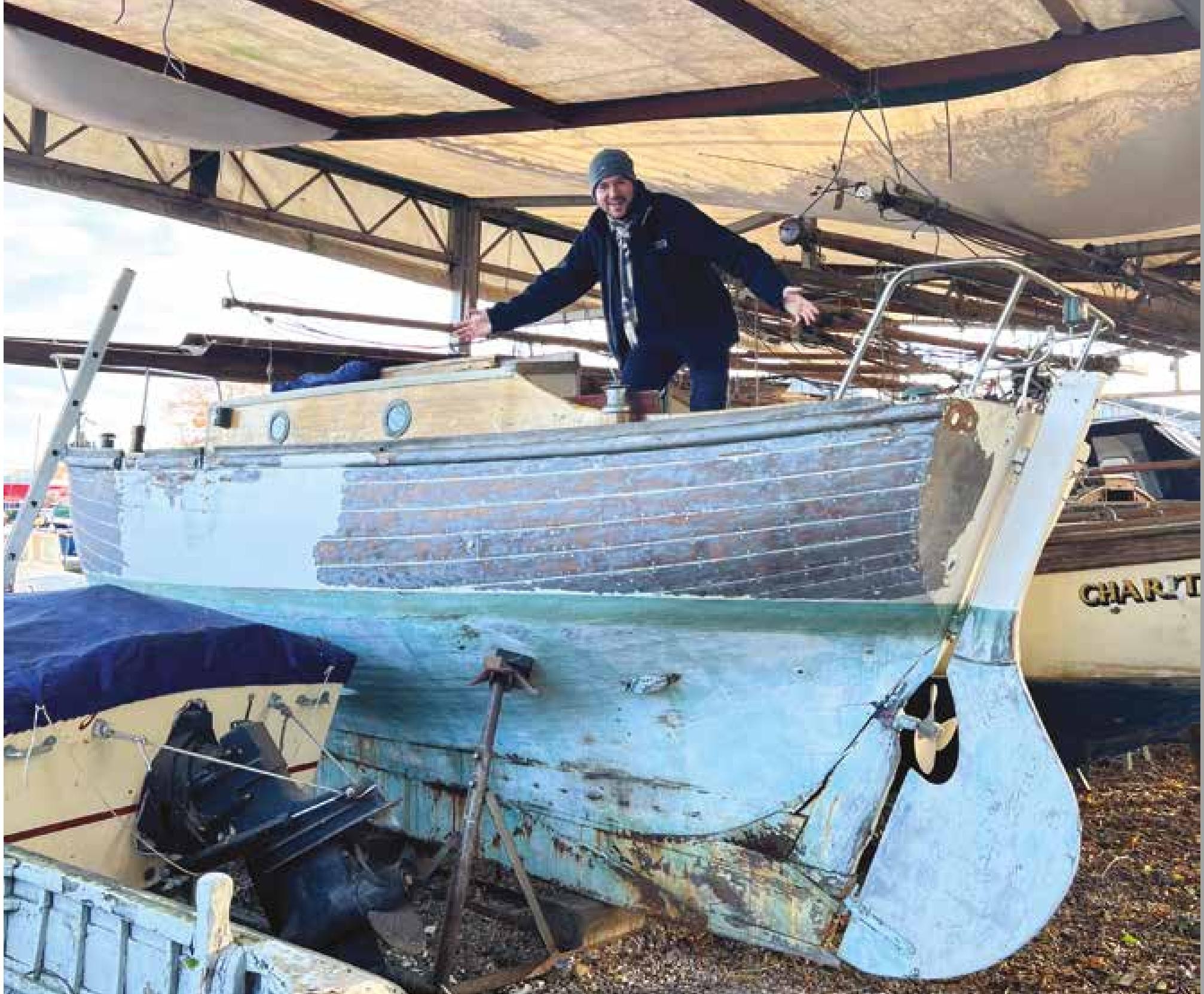
Waiting in the Tent for new owners, the 1963 Blackwater Sloop Catspaw reminds Jack how much he loves sailing.
We all know of a boat that is at risk of being lost even though: “She is too good; somebody should save her”. In reality, many appealing craft are not saved but sometimes all these boats need is just a little more time for the right somebody to come along.
Woodbridge and Waldringfield Boatyards in Suffolk hold a small stock of such boats, which otherwise might have been broken up or burned. Most are locally-built or designed pocket cruisers, housed in an open-sided Tent of Dreams. Three boats from the Tent made it to re-launch in 2025 and are hoping to sail in the biennial 2026 OGA Deben Rally.
WAITING…
In 2020, the 22′ (6.7m) Deben Four Tonner Maid of Veryan was in Eling, near Southampton. Her companionway doors had been damaged by vandals, her wooden mast had been lost and replaced by a second-hand aluminium one jammed on to a wooden base and a thin coat of topsides primer was her only protection. She had been taken on by the friend of her deceased former owner but was headed for the bonfire if she couldn’t be rehomed. She had been built by the famed Whisstocks Boatyard in Woodbridge in 1949 and counted designer and boating journalist John Leather amongst her former keepers. Indeed, in a March 1990 article for The Boatman, he referred to his Maid of Veryan as ‘the best cruising yacht we have ever owned’. How far she had fallen. Bought by the boatyard for £1, craned ashore and transported by lorry back to Woodbridge, her wait began.
Later that same summer, Catspaw, one of the last Dan Webb & Feasey 20’3″ (6.2m) Blackwater 3-Tonners ever made, arrived at Woodbridge Boatyard, not by lorry but on the deck of a local work barge. Her keelbolts had been removed and the project abandoned at an upriver boatyard where she was going to be broken up, until she was gifted to the yard. Catspaw was late to the party which began with a postwar boom in tabloid yachts in the 1920s. By Catspaw’s launch in 1963, more than 300 Blackwater Sloops cruised the British Isles, with one of its number winning 17 out of the 23 East Coast races and another winning the Little Ship Club’s ‘most seamanlike vessel’ on arrival at its rally to Calais.
In 2022, a clinker dinghy by the name of Clythie was donated to the Tent by the family of another notable naval architect, William Maxwell Blake, the designer of, amongst others, the Deben Four Tonner. The dinghy had been their family tender for many decades but had fallen from use and from maintenance and was now being eyed up as a potential plant pot. The family had thought that she may have been built by Everson’s, now Woodbridge Boatyard, but her shape gave her away as a Robertson’s dinghy, another Woodbridge yard and one with whom, along with Whisstocks, WMB had a working relationship.
All three boats waited alongside others, with signs for the public to read, in the hope of finding the right somebody.
MAID of VERYAN…
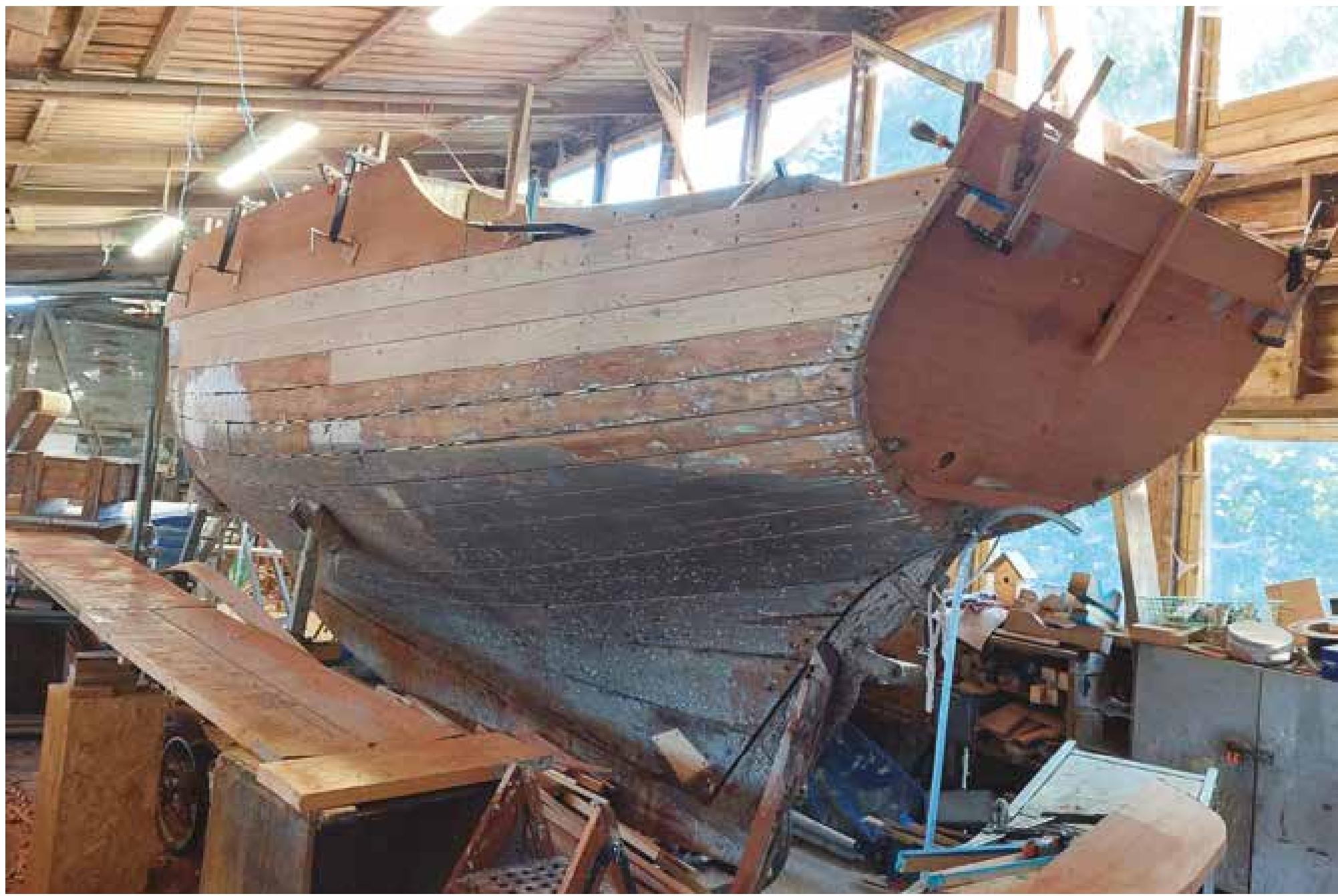
New hardwood sides for the full-width coachroof were inevitably expensive but keep the character of the Deben 4-Tonner.
… was the first to succeed. For six years, Vicky and Darren, a young couple living in London, had spent summer weekends in Suffolk sailing their 12′ (3.7m) clinker dinghy. Maybe Vicky would have been satisfied pottering on the east coast rivers for 6 more years but Darren saw Maid of Veryan’s potential to take them beyond the bar. As wooden boat owners, they knew it was going to be a 2-year project – of course, it took 4! – but their restoration project meant they would learn every rivet and plank intimately.
The survey showed her planking was in good condition, but many of her port side ribs had been damaged, perhaps from a grounding, so their first job was to replace them. The canvas covered decks were also badly damaged and were replaced with grooved laminated ply, stiffening up the whole hull. They had hoped to save the cabin sides but once the decks were removed, they realised they would need to fully replace 50% of them too; a disappointment since the distinctive full width cabin is a characteristic of the boat and replacement timber expensive. Not wanting to lose so much of the original boat, the pieces of cabin side which could be saved were reused elsewhere, including in the cockpit sole.
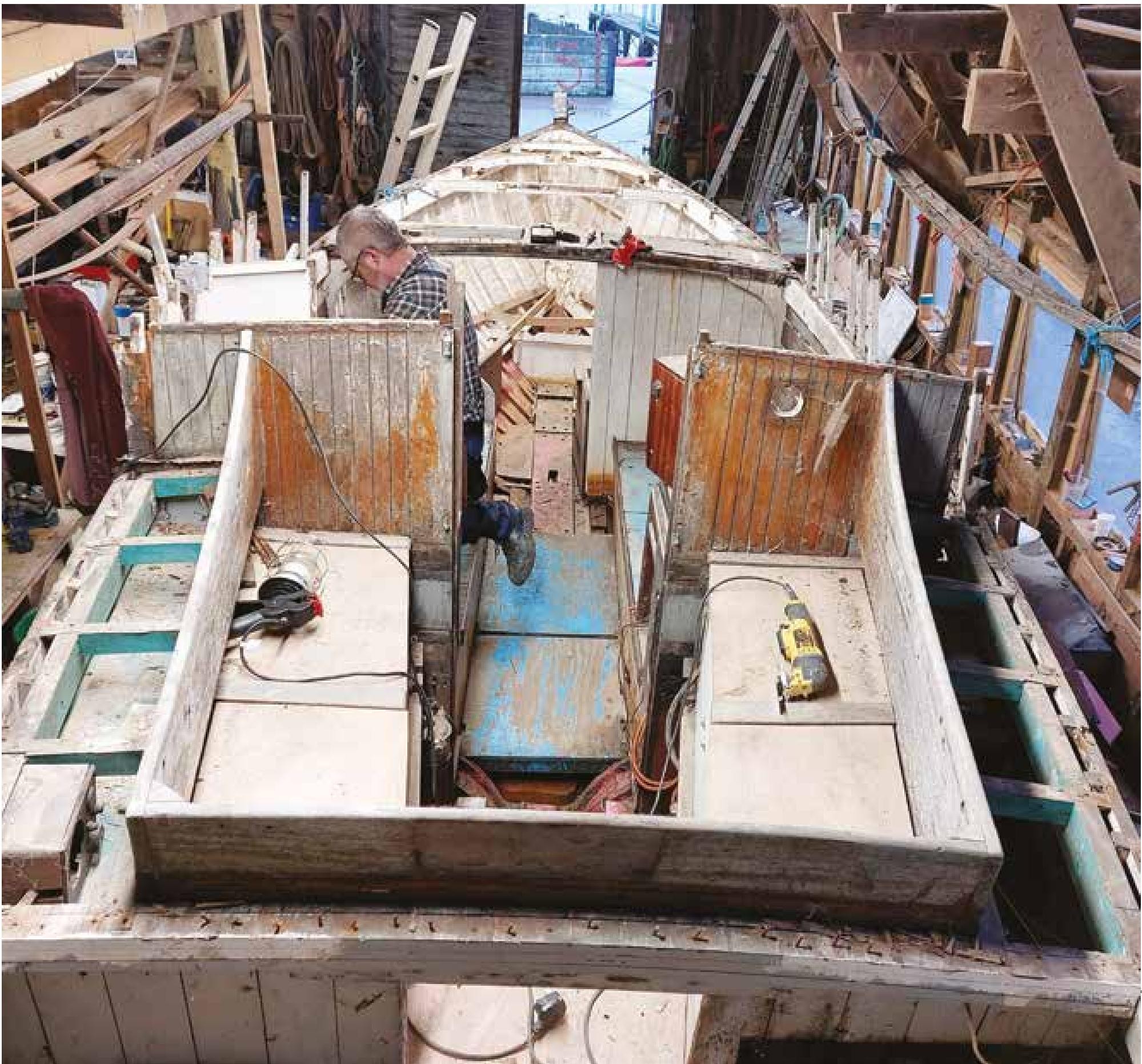
The Woodbridge shipwrights begin restoration of Maid of Veryan by stripping away the rotting canvas-covered deck.
While Woodbridge Boatyard carried out this work, the couple were busy restoring anything that could be removed from the boat: hatches, rails and the original Baby Blake toilet. Then with all the strength back in the boat plus a complete new cabin top, Darren and Vicky took over the main work. Learning to caulk from the shipwrights, they spent the rest of that summer sanding, painting, caulking every seam and filling all the shiny new rivet heads.
At the end of 2024, they left London for Suffolk and they were back in the yard on a cold January morning to ‘finish’ the boat. Most of the work they were able to do themselves, including a new hatch for the forepeak, new benches in the cockpit, replacing all the trims, handrails, winches and of course, more painting and more varnishing.
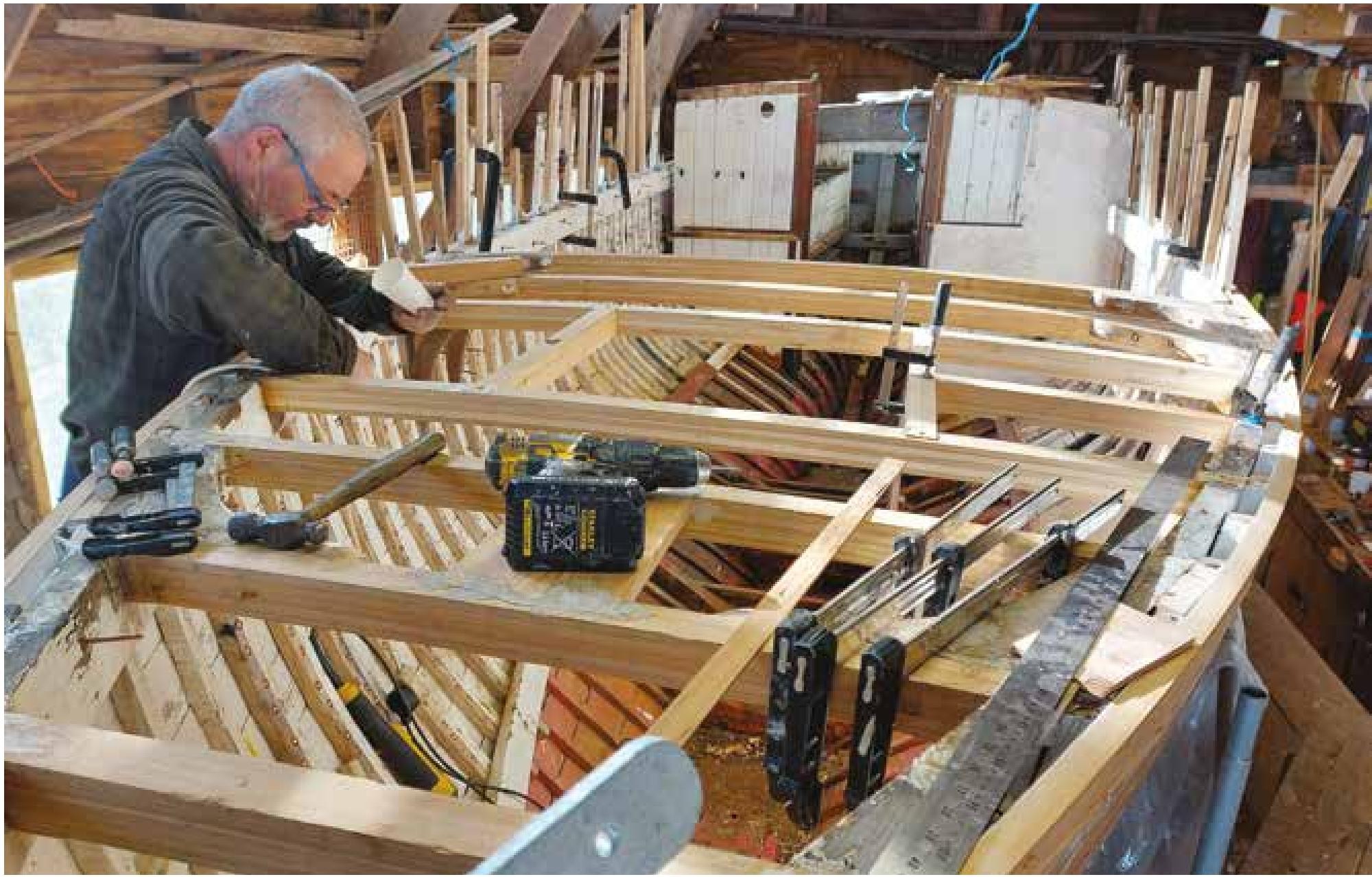
The new laminated deck beams replacing the weak originals will add strength and much needed rigidity to the old hull.
At this stage it really felt like the boat was coming together except for one rather significant element, a mast! Darren spent many evenings studying old plans, ship design manuals, articles and speaking to other Deben 4 Tonner owners but the information about the original mast was scant. All they knew was the height, that it was hollow and its finished weight. Darren set about designing a new mast from first principles, with the help of many WaterCraft articles and the mast was made from Douglas fir by Woodbridge Boatyard. A welder friend made a new tabernacle and fittings and the mast was stepped and the boat rigged in the summer of 2025.
Darren and Vicky then took final measurements for the sailmaker and while the sails were made, finished the other small jobs ready for a test launch in the autumn. Unfortunately, by the time of the launch, the season was over but the planks had already swelled from the higher autumn humidity and the boat had taken up beautifully. Maid of Veryan’s cabin fitout so far is only two benches and the Baby Blake, so more work is planned.
Before tackling it, Vicky and Darren are going to spend the 2026 season focused on sailing, not on boat joinery.
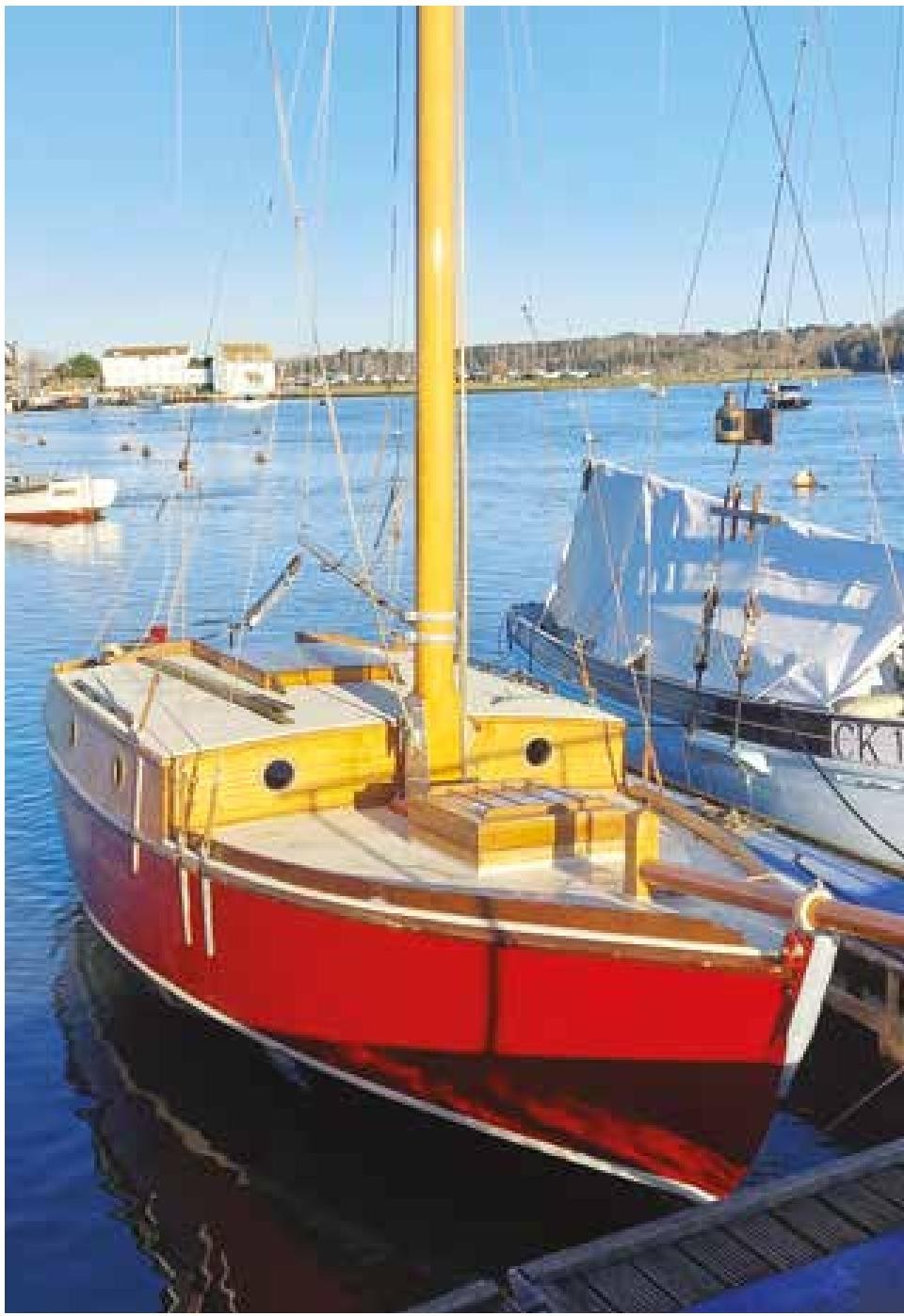
CATSPAW
… was next to catch the eyes of potential rescuers. Another young London couple, Jack and Christy, had a serendipitous encounter with Catspaw, which re-ignited a dormant sailing obsession in Jack, a civil servant and intrigued Christy’s practical mind as a professional tapestry weaver.
Identified as Dan Webb’s 3-ton design, originally offered in the 30s as an improvement on his popular original 2.5 tonner. Catspaw was not in bad order when she arrived at the boatyard but the hull had been allowed to get very dry, was missing key parts and the inevitable archaeological odyssey of wooden boat restoration would only reveal more.
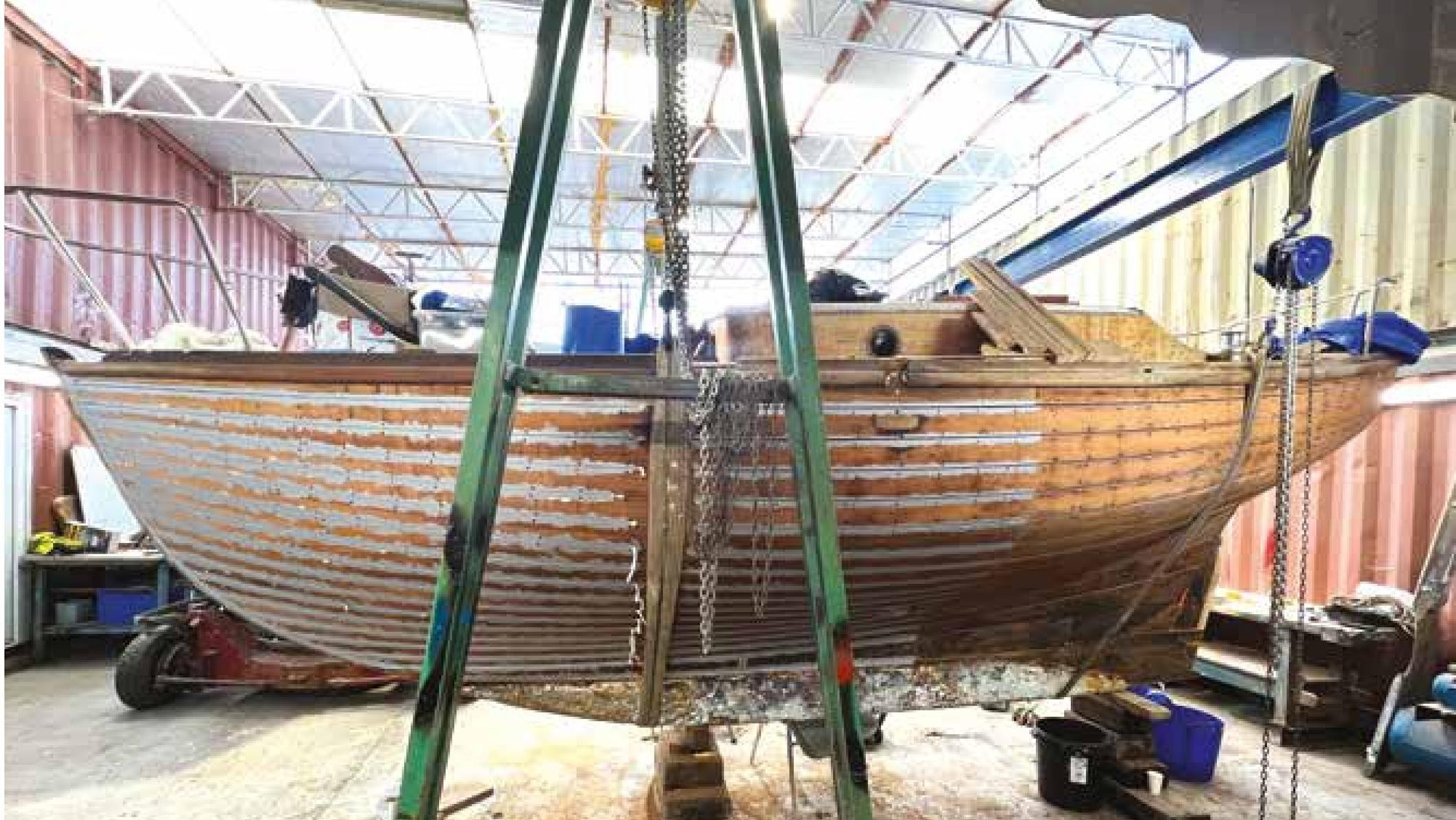
Catspaw, refastened and recaulking almost completed.
In the December snow of 2022 Jack and Christy set to work, perhaps ill advisedly, stripping paint and varnish. They found Catspaw had clearly seen much action in her life. It was later discovered she had been previously restored in the 1990s in Southwold, at the same time as Jack would have been playing around the yard as a child.
Jack and Christy began her second rebirth with, first, the inevitable rectification of the epoxy and car body filler patches so common in old hulls.
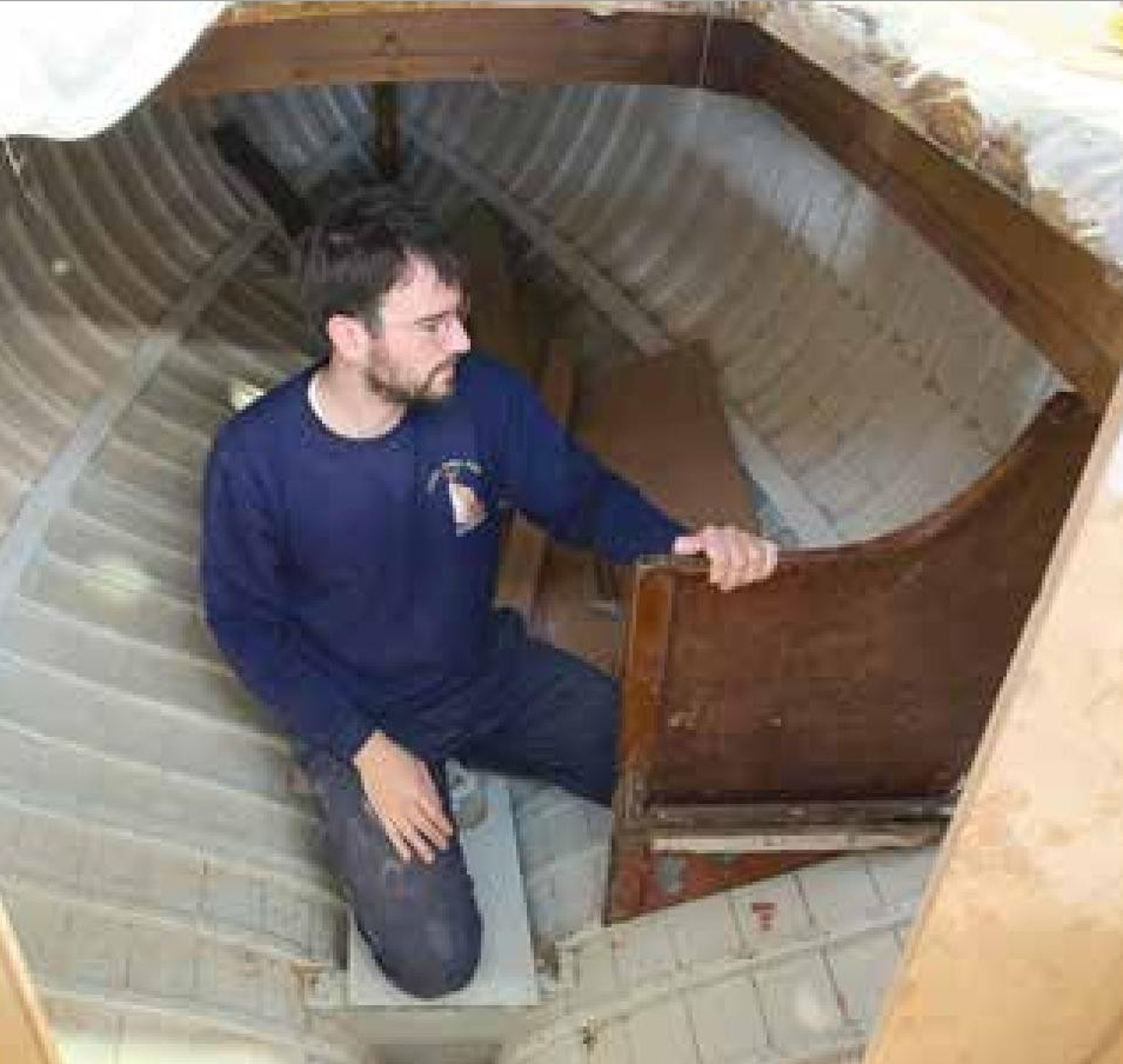
The essential first stage of redesigning the interior.
Initial investigation not only revealed that the seams neededed recaulking but also that most of her fastenings had gone. This setback required time in the boatyard workshop with some refastening carried out by the yard, before Jack and Christy took on the majority of the work for the next 12 months. This allowed costs to be kept down, techniques to be taught to the first-time yacht owners and the yard’s boatbuilders’ skills to be used to best effect.
In other respects, much like many yachts of her time, the original construction was luxurious by today’s standards and had held up well. Her single strakes of mahogany planking were largely sound with only a few minor replacements around the chainplates needed. Her sagging stern assembly had suffered the effects of a retrofitted inboard engine and was retightened with bronze through-bolts, tar and oak. This naturally raised the question of auxiliary propulsion and it was then that Jack and Christy decided they would escalate an already ambitious rebuild to bring her back to Dan Webb’s original engineless design entirely.
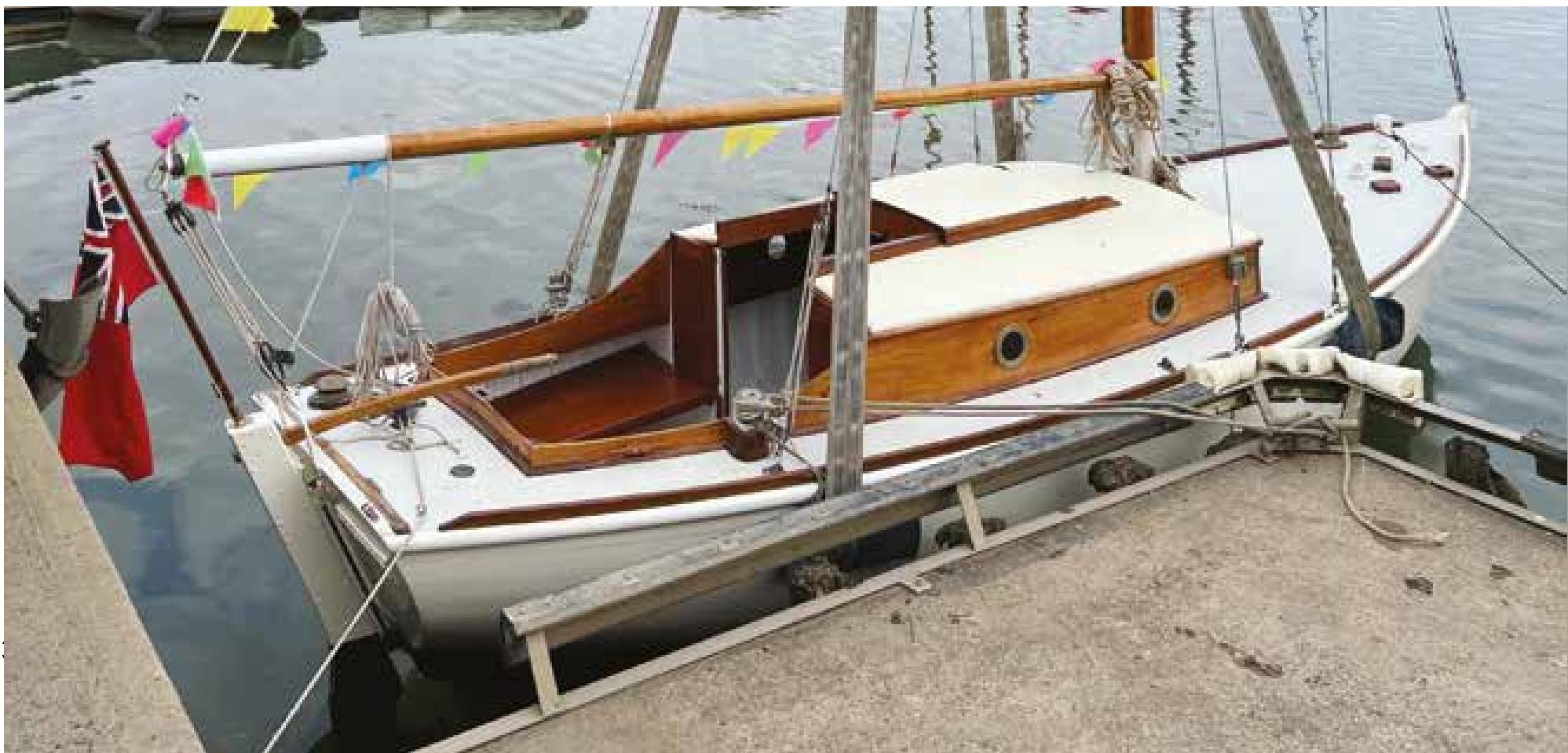
Finally afloat again, in time for a long summer cruise.
Previously, Catspaw had been given a raised ply cockpit to make space for an engine underneath. So with the hull refastened the cockpit was removed in its entirety. Jack had found Dan Webb’s drawings and worked with the yard to plan a deeper, open and simple cockpit, using modern materials to improve stiffness without compromising the original design.
While the yard built the cockpit, Jack and Christy rebuilt the cabin interior, fitting a proper sole, new half bulkheads and utility areas, while opting for a more open layout than the interwar preference for compartments. The original solid spruce mast was taken back and completely revarnished, and strengthened in places. Her suit of James Lawrence sails were laundered and repaired, while Jack and Christy spent their evenings after work learning to splice, serve and parcel.
Like Darren and Vicky, Jack and Christy also moved to Woodbridge and many cans of paint later, on a sunny August day, Jack’s grandmother, Agnes, christened a reborn Catspaw back to the water. After a few snatched shakedown cruises, Jack and Christy are now planning a long summer cruise to enjoy their 3-year labour of love.
CLYTHIE…
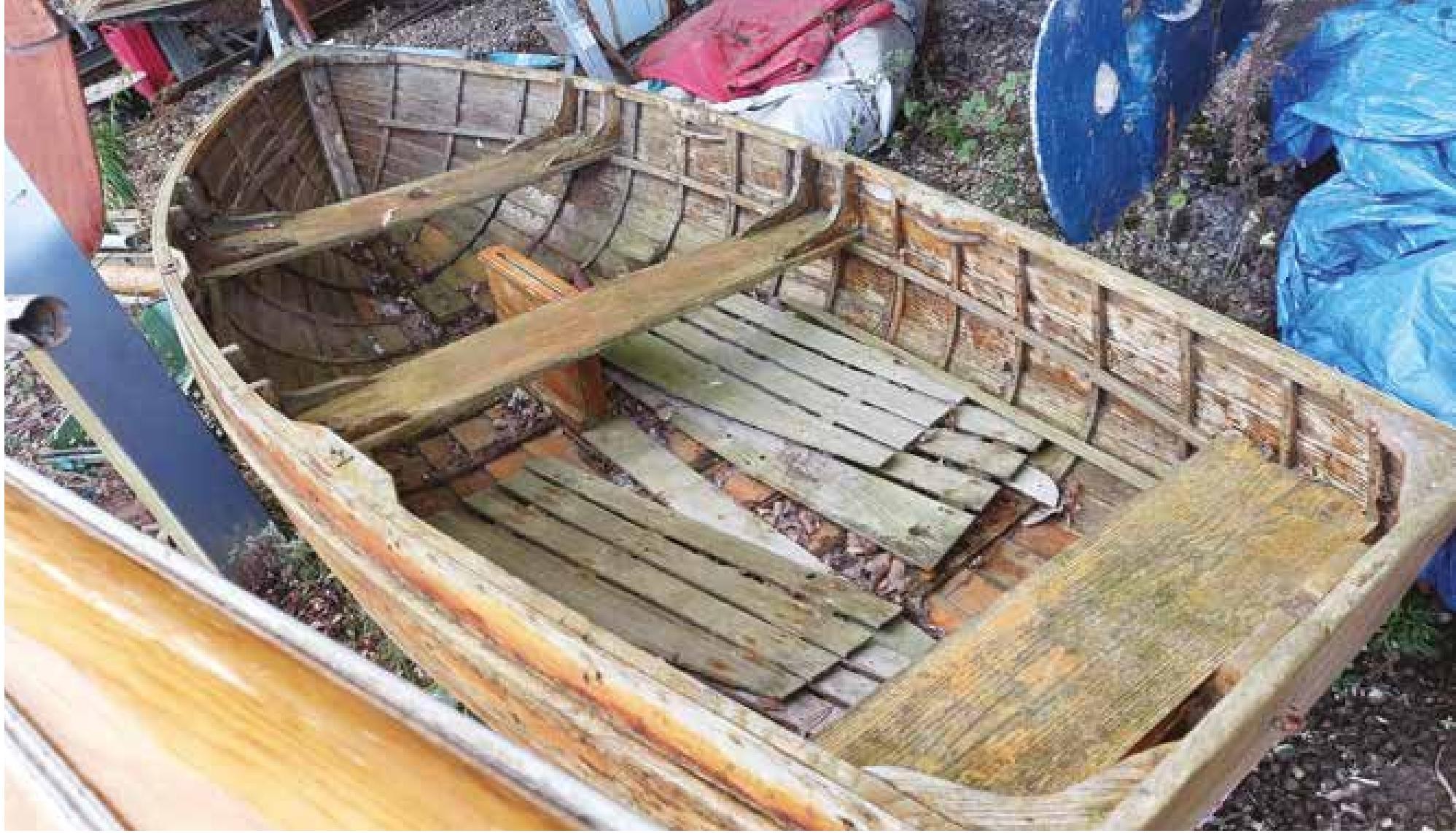
… perhaps demonstrates best the difference that giving boats a little more time can make. In 2023, James, visiting friends in Suffolk, fell for the Orford 10 Foot Class, as much for its friendly sailors as for its pretty lug-rigged dinghies. However he found that 10s rarely change hands, many still with their original families after 70 years The class told James that if he found a similar sailing dinghy he could join their regular racing, so James asked Woodbridge Boatyard if any 10′ (3m) clinker sailing dinghies were for sale. Cue: Clythie!
After some over-excitement when it was thought she might be a lost Orford 10, it was decided that she was the more common rowing version of the Robertson’s 10′ clinker dinghy which had been fitted out for sailing. Still, as close to finding an Orford 10 as could be hoped for.
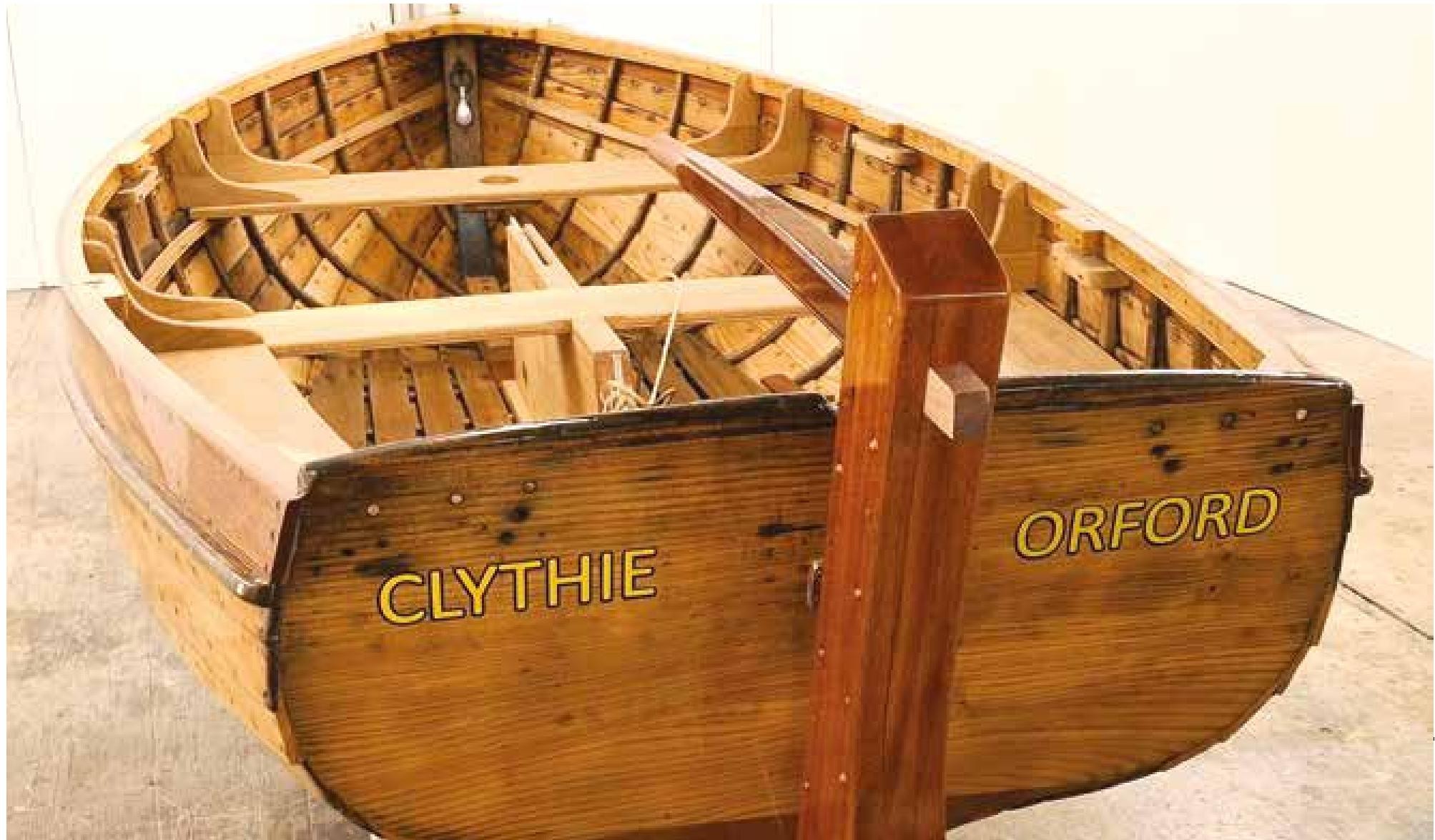
Clythie was not without problems: she had 11 broken ribs, several split or damaged planks, both inwales were broken in several places and a part of her stem needed to be replaced. In addition, to become an Orford 10 she would need a pivoting centreplate instead of daggerboard, a new thwart layout, spars, sails and rudder; work which James left to the boatyard.
In each case, boats which may have ended on bonfires are afloat again, thanks to new owners.
www.woodbridgeandwaldringfieldboatyards.com www.tickettailor.com/events/eastcoastoga/2075322
www.woodenboatgathering.com
Matt Lis
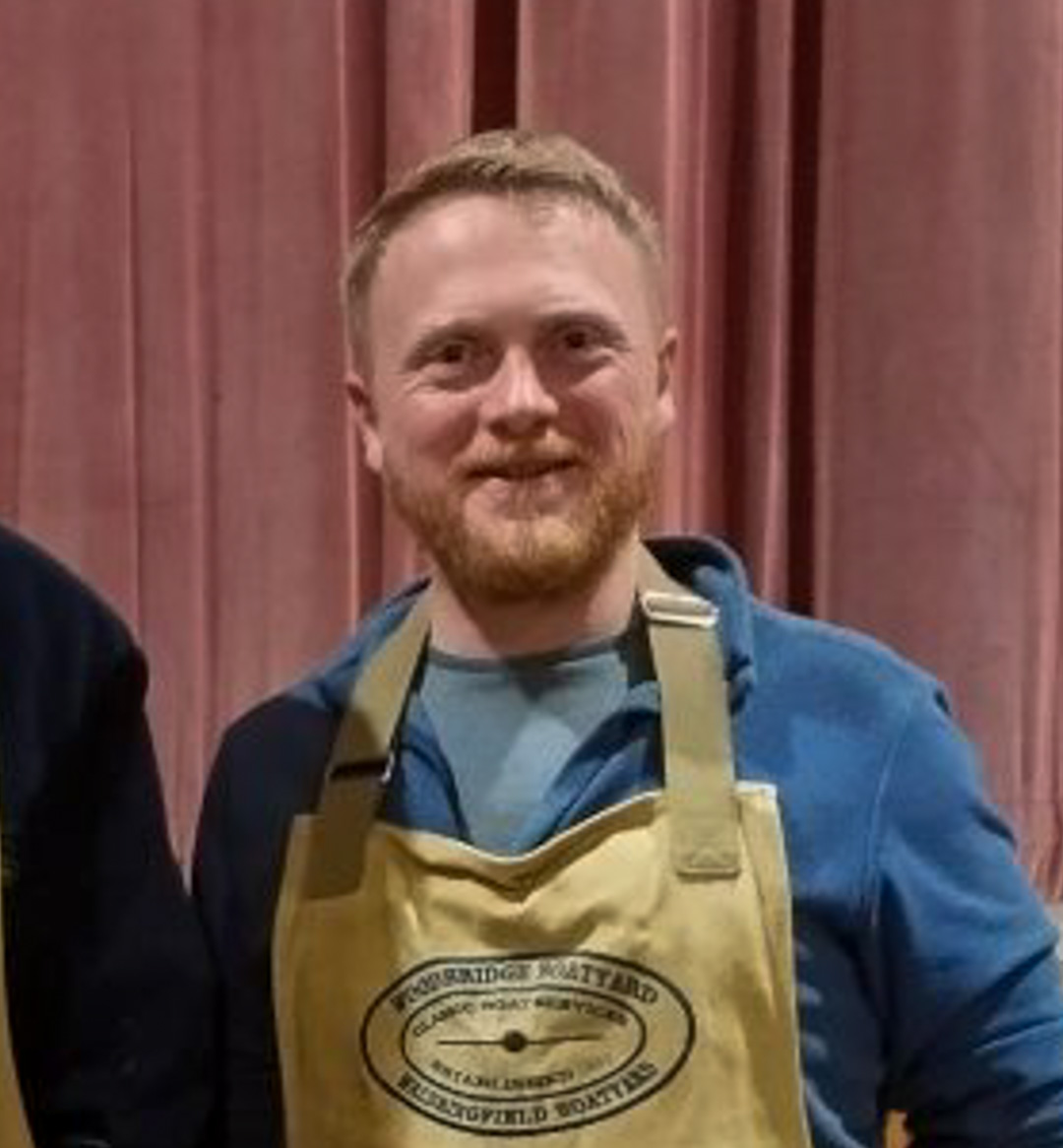
Matt Lis has been the General Manager of Woodbridge Boatyard since May 2019, when the yard moved into the ownership of Eric and Maxine Reynolds.
Matt, growing up in Burnham-on-Crouch in Essex, has sailed since he was 5 and comes from a boating family of marine engineers and professional sailors. Under Matt and the Reynolds’, the Woodbridge Boatyard has grown from a team of 3 to a fulltime team of 11 (6 boatbuilders, an engineer, a painter, two trainees and Matt) with more during school holidays.