Some Portable Magic: RDA Books for Christmas and the New Year

‘Books are a uniquely portable magic,’ wrote Stephen King. Although Stephen King is not on my personal favourites list—and isn’t on this RDA list either—he is undeniably someone who understands about the relationship between words and readers and the ability of books to lift us away from our everyday preoccupations, fire our imaginations and extend or transform our understanding of the world. It doesn’t always happen, but when one finds a book that seems to speak directly to one, one has found a treasure. In this article, for Christmas and the New Year, some of the RDA Committee members and magazine contributors share their finds from 2025.

Continue reading

Deben Estuary Water Quality Update – Woodbridge Outfall Safari

Introduction

Water Quality is a fast moving, high interest area for the River Deben Association.  Since the  last RDA Journal Article (‘Water Quality Update’ January 2025), Waldringfield Bathing Water Designation Area has achieved (announced 25th October 2025) a second year of clear run 20/20 [Excellent] measurements across the May-September Environment Agency (EA) bathing season.

Two significant projects are now in their start-up phases, each with a major focus on water quality:

The Deben Climate Centre’s Four River’s initiative (link) across the Deben, Blyth, Alde and Ore and Waveney “A new three-year co-funding agreement between East Suffolk Council and Deben Climate Centre… The aim will be to restore degraded ecosystems, support nature recovery and test a range of different flood alleviation measures.”

The Essex and Suffolk Rivers Trust has initiated the ‘Recovering the Deben: Source to Sea’ (link) “an ambitious project that aims to restore the land, water, and nature throughout the River Deben catchment and estuary”

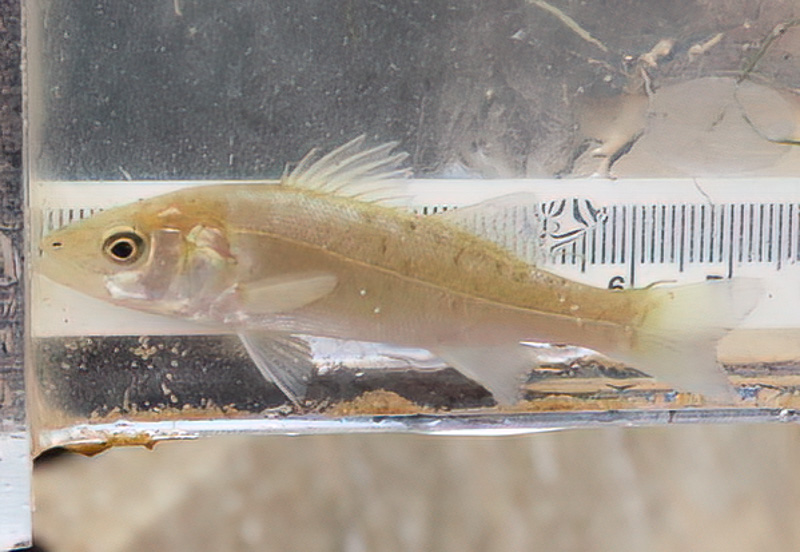
This latest journal article focusses on trying to resolve the debate on just how many outfalls there are between Martlesham Creek to Wilford Bridge.  The answer is Fourteen (caveated as usual as there is more to learn, and there is an extra one inland at the Deben Yacht Club (DYC) dinghy park).  Below for those interested is a little bit more detail of how they work.

Continue reading

New Deben Walks

OS Explorer 197 Ipswich, Felixstowe & Harwich

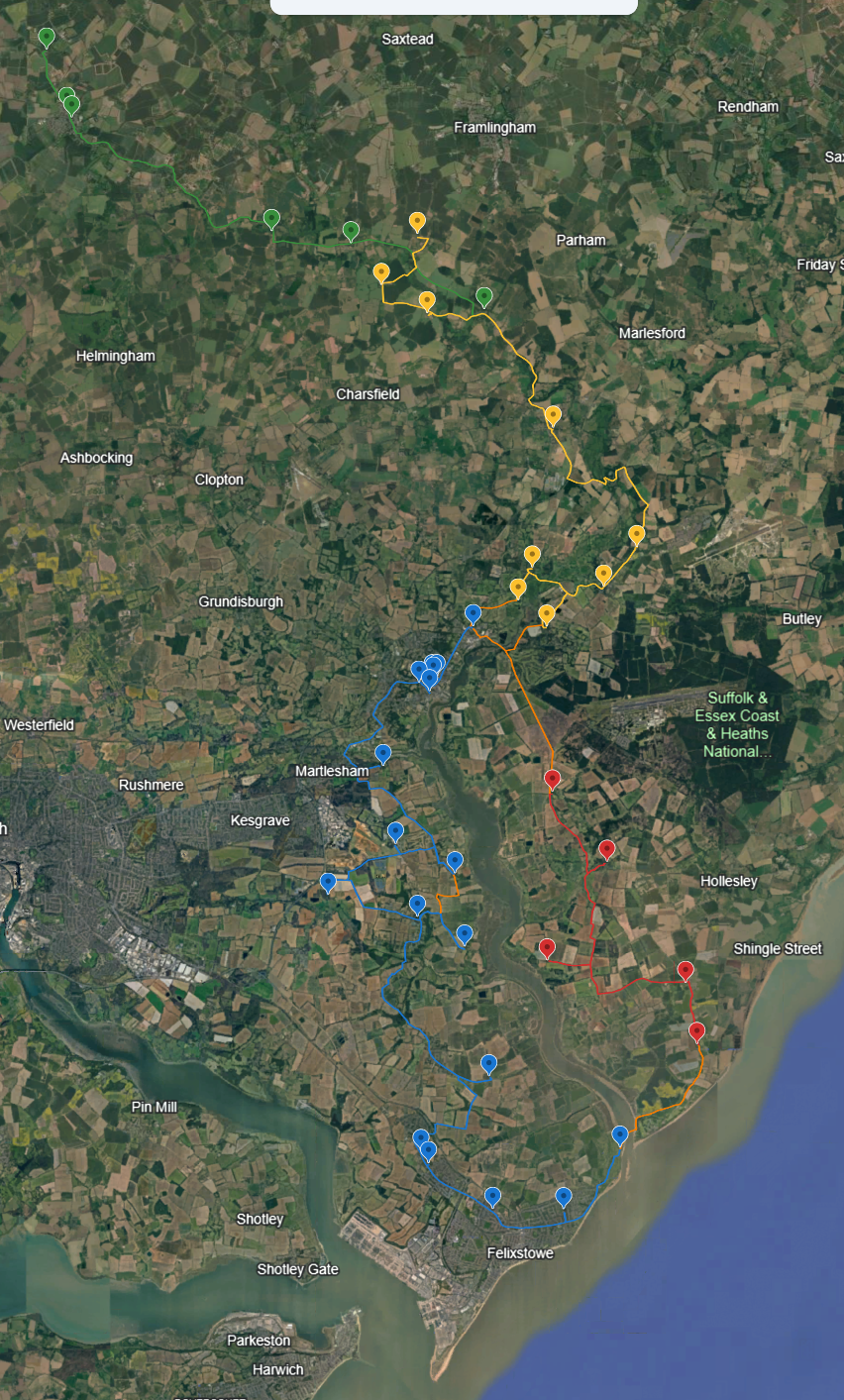
In September 2025 sections of the recently-created King Charles III England Coast Path were opened along both banks of the Deben: from Bawdsey to Wilford Bridge and Wilford Bridge to Felixstowe Ferry. See map with the whole route marked in blue. Much of the Coast Path route is along existing rights of way. However, there are three ‘new’ sections which Judy and I decided to investigate this autumn.

Continue reading

Beyond the tides: how salt shaped Suffolk’s economy and coastline

The unassuming coastline of Suffolk holds a fascinating and ancient secret: it was once a hub for sea salt production, an industry that has ebbed and flowed with the tides of history. From prehistoric fires to Roman industrialisation, and from medieval monasteries to the Victorian era’s final curtain, the story of salt-making in Suffolk is a compelling one, and one that is now seeing a modest, modern revival.

Continue reading

The Company of Dragonflies: Four Dragonflies in a Summer Season

I visited the slow flowing stream that runs parallel to the river Deben, on several occasions during the summer, looking for dragonflies. This is my first season of observing and photographing dragonflies and damselflies. I would like to share with you, my field notes. In my last article I discussed damselflies observed in the same location. My focus now turns to dragonflies. My knowledge and learning was obtained from observation, then I researched aspects of behaviour that I saw, such as mating and egg laying behaviour. The most interesting observations of the dragonflies were the different ovipositing behaviour  (laying of eggs), which could be alone or together with mate, and different locations for both mating, and ovipositing. I came across four dragonflies on the riverbank: The Emperor; Southern Hawker; Migrant Hawker, and Common Darter.

Emperor Dragonfly

I observed a fairly large dragonfly laying eggs in June. It was an Emperor (Anax imperator) dragonfly. The Emperor dragonfly is the largest species of dragonfly in the UK. It has an average length of 78mm and average wingspan of 106mm. This species has a mating and flight season between June and August (see the chart below of the flight and mating period of the dragonflies discussed here).

Emperor Dragonfly Ovipositing

Continue reading

Go to the South Cerney Open!

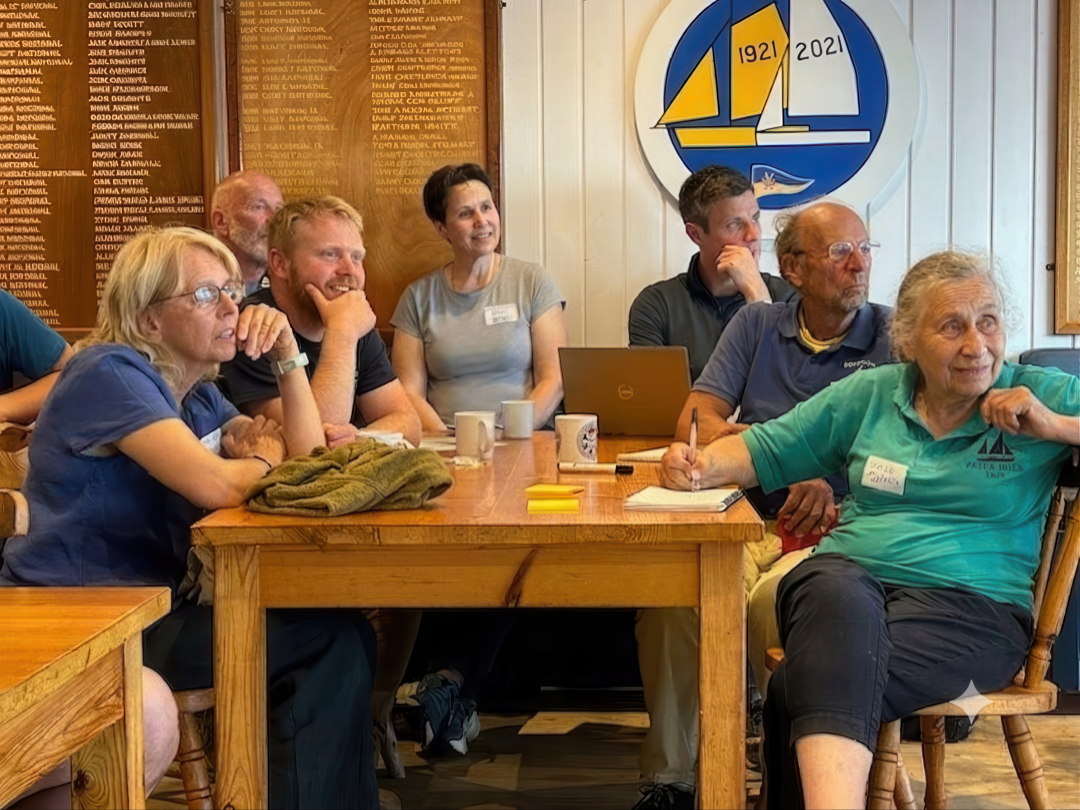
Alice Thorogood has been the parent of three children (Gwen, Hettie and Kemmel Thorogood) in the Waldringfield Cadet Squadron for the last eight years. She and her husband Frank have been fully involved with the practicalities of race management, regatta organisation and committee work as well as ferrying their own children and their dinghies to innumerable events at home and abroad (including world championships as far away as Australia). Cadet sailors must retire at 17. Suddenly it’s all over.

Alice used the lyrics of the Baz Luhrman song ‘everybody’s free (to wear sunscreen)’ to reflect on the friendships she’s made and the experience gained.

Hettie as a junior sailor (left) and at the 2024 World Championships (right).

Ladies and gentlemen of the cadet class of 25:

Go to the South Cerney open.

If I could offer you only one tip for the future, camping at the SC open would be it.
The long-term benefits of attending this open have been proved by the existence of enduring friendships beyond the class, whereas the rest of my advice has no basis more reliable
Than my own meandering cadet experience. I will dispense this advice now.

Continue reading

Two Debenham Walks

Introduction

Some thirty-four miles inland from the mouth of the Deben, the village of Debenham nestles in quintessential Suffolk landscape. It is one of the unspoilt medieval gems of high Suffolk. To the west of the village, around Mickfield meadow, lies the source of the Deben, a sometime trickle of water in a field of flowers.

Continue reading

Damselflies: Dancing Ballerinas of the Riverbank

I observed a large damselfly in late July whilst walking alongside the slow flowing, fresh water stream that runs parallel to the Deben, near Wilford Bridge. Banded Demoiselles Calopteryx splendens are mostly seen during June and July on sunny afternoons, although you may see them in August and September. Male and female Banded Demoiselles have a striking pattern and colour. The female in the image below, has a metallic emerald thorax and abdomen, with a bronze red tip to the abdomen. The last three abdominal segments have a yellow line1. The males and females both have translucent light green wings. The females have a small white mark, or pterostigma at the wing tip, whereas the males have no pterostigma2. Both males and females are 48mm or 1.4 inches in length and their hindwing can be 36mm or 1.4 inches long. This species is present throughout Britain but not in the Scottish highlands. It is common in much of Central Europe including Germany, France, and Poland but absent from European countries that are cold, for example, Scandinavia and those countries that are dry, such as Spain. Their range extends into central and Western Asia. Habitat becomes problematic when flowing freshwater is scarce.

Banded Demoiselle Calopteryx splendens

Continue reading

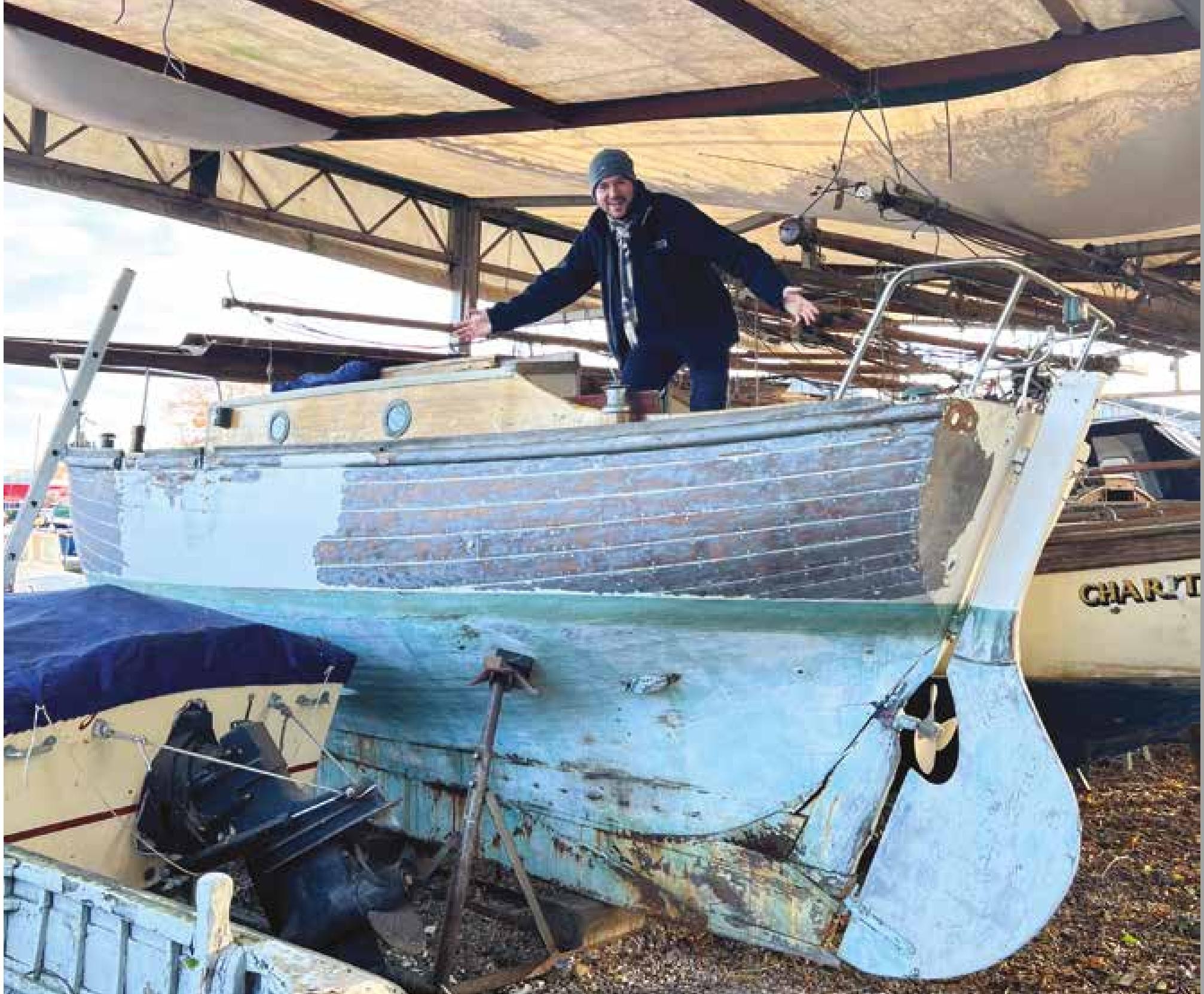
The Making of a Mizzen Mast

If a mast breaks in a marina, and nobody is there to hear it, did it really happen? Well, sadly, yes and it won’t take long for everybody to hear about it.

In my case, it took about 10 minutes to hear about it when, late on a Sunday evening, the work mobile rang and I answered to find Julia close to tears. A misjudged approach into a marina berth in semi-darkness had led to ‘Peter Duck’s portside mizzen shroud catching on the cranse iron of a neighbouring boat. For those less familiar with the particular peculiarities of traditional boat rigging, the cranse iron is the fitting on the end of a bowsprit on to which the bobstay, forestay and bowsprit shrouds attach and it is designed to handle immense loads so it had no trouble winning this particular battle.

Continue reading