
By Janet Harber
A wander across the Deben flood meadows near Wickham Market – OS Explorer Map 212 Woodbridge and Saxmundham
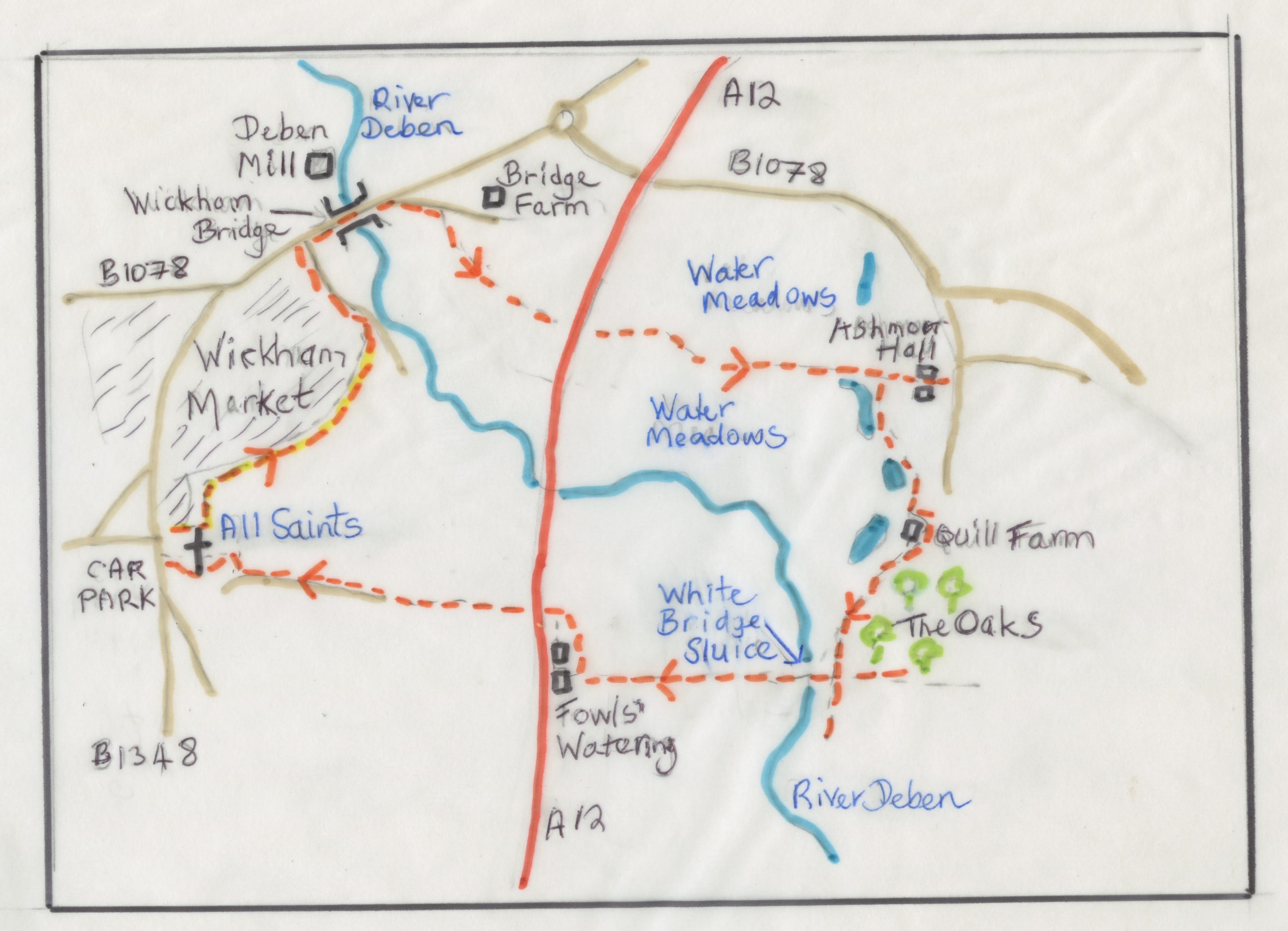
In October Judy and I investigated a three-and-a-half-mile circular walk from Wickham Market, around the Deben valley. It is one of three interesting local routes to be found on the visitwickhammarket.co.uk website. The two others we had walked previously but most of The Mill Route was new to us. We left our cars in the Wickham Market Crafters Car Park, entrance between two shops on the south side of the Market Place; there are toilets and you can pay by RinGo or cash.
The official circular route takes you down the High Street to Wickham Bridge and Rackham’s mill. However, we crossed the High Street and headed towards All Saints church, with its distinctive octagonal tower topped by an elegant lead spire. Keeping the church on your right, follow the footpath, turning left and then right behind the houses, with the allotments to the right.
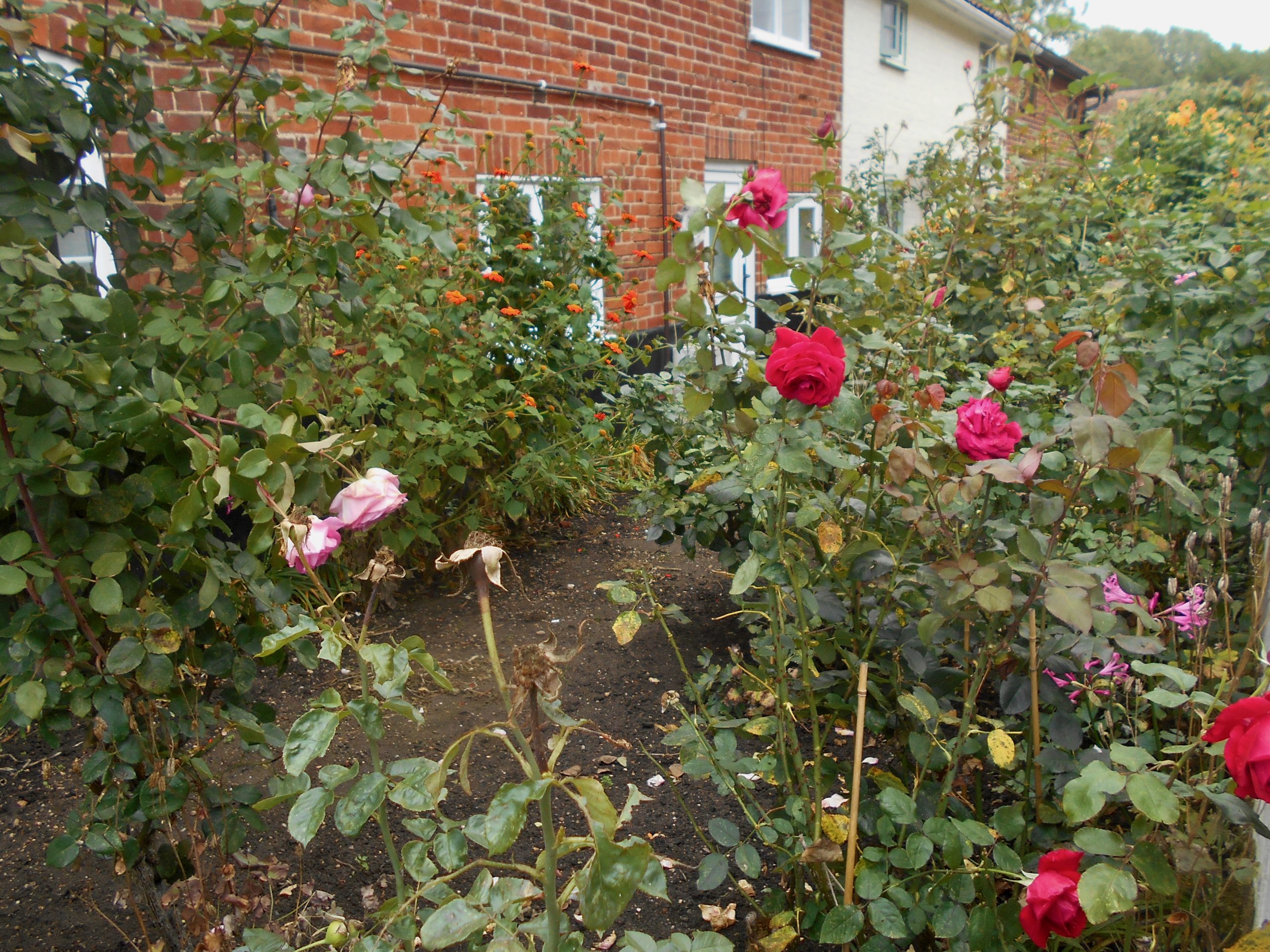
Old cottages in Wickham Market
Turn left onto a lane which takes you to the B1078 near some very old cottages. Turn right and go down to Wickham Bridge from where you can view the fine old Deben mill buildings where stone-ground flour was produced, by water and later steam power, until the 1970s. The iron roller mills, used from 1893, were manufactured by the Whitmore and Binyon Ironworks, just up the road.
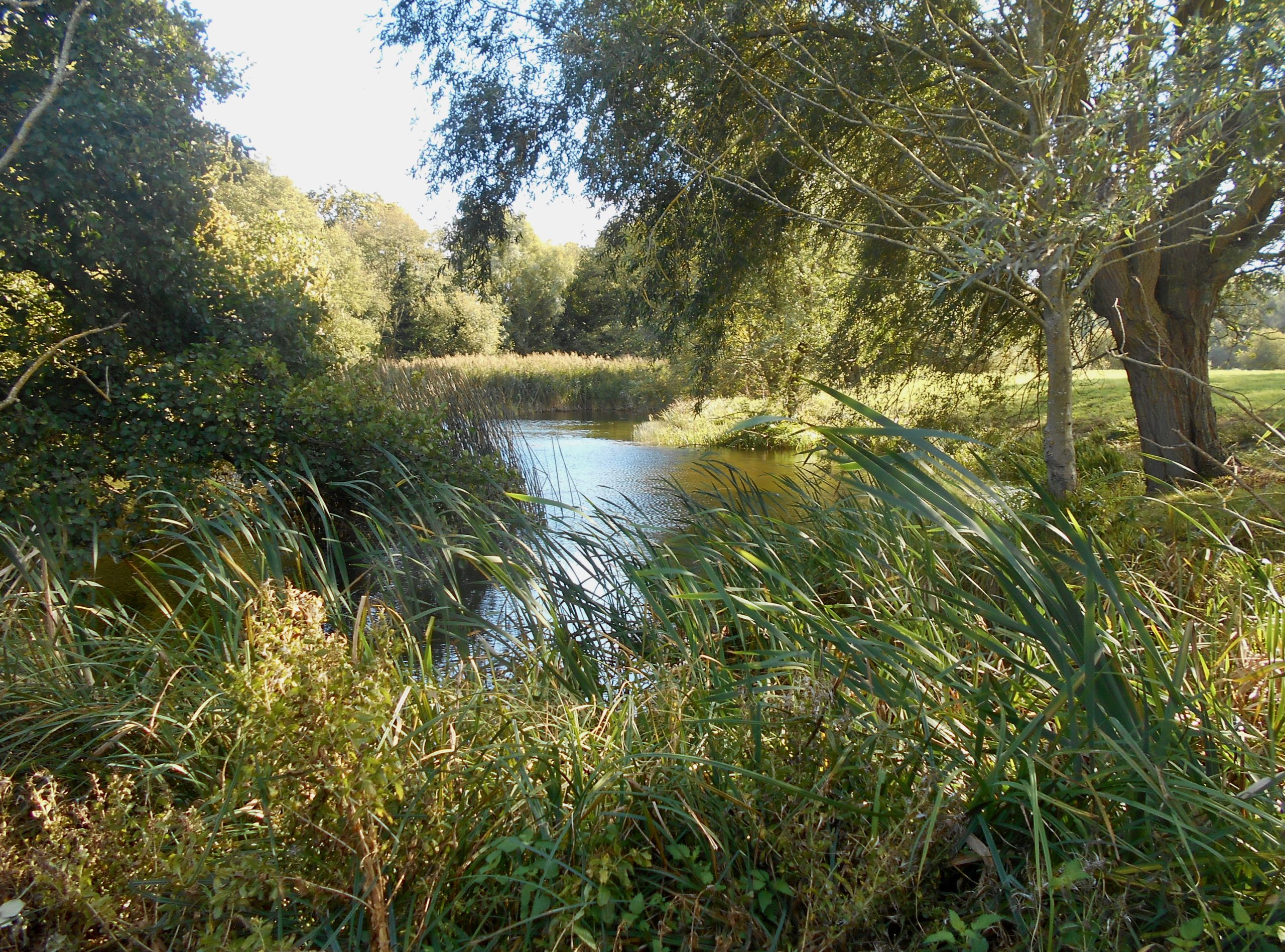
Reefs, rushes and willows on the flood meadows
Immediately across the bridge take the right turn and just before Bridge Farm turn off onto a green lane on the right, heading across the horse paddocks towards the A12. Emerging from under the A12, go through a gateway and head across the meadow. We could not find the next ‘small gate’ described in the official route instructions; nor was there any sign of a fence. So we crossed a shallow dry ditch into another meadow and headed diagonally left towards a line of alder trees, as instructed. After crossing this meadow we eventually found and turned left onto a track under ‘a canopy of trees’ with water meadows, drainage ditches, ponds, willows, reeds and rushes on either side. According to the directions, the trees hereabouts include some rare native black poplar.
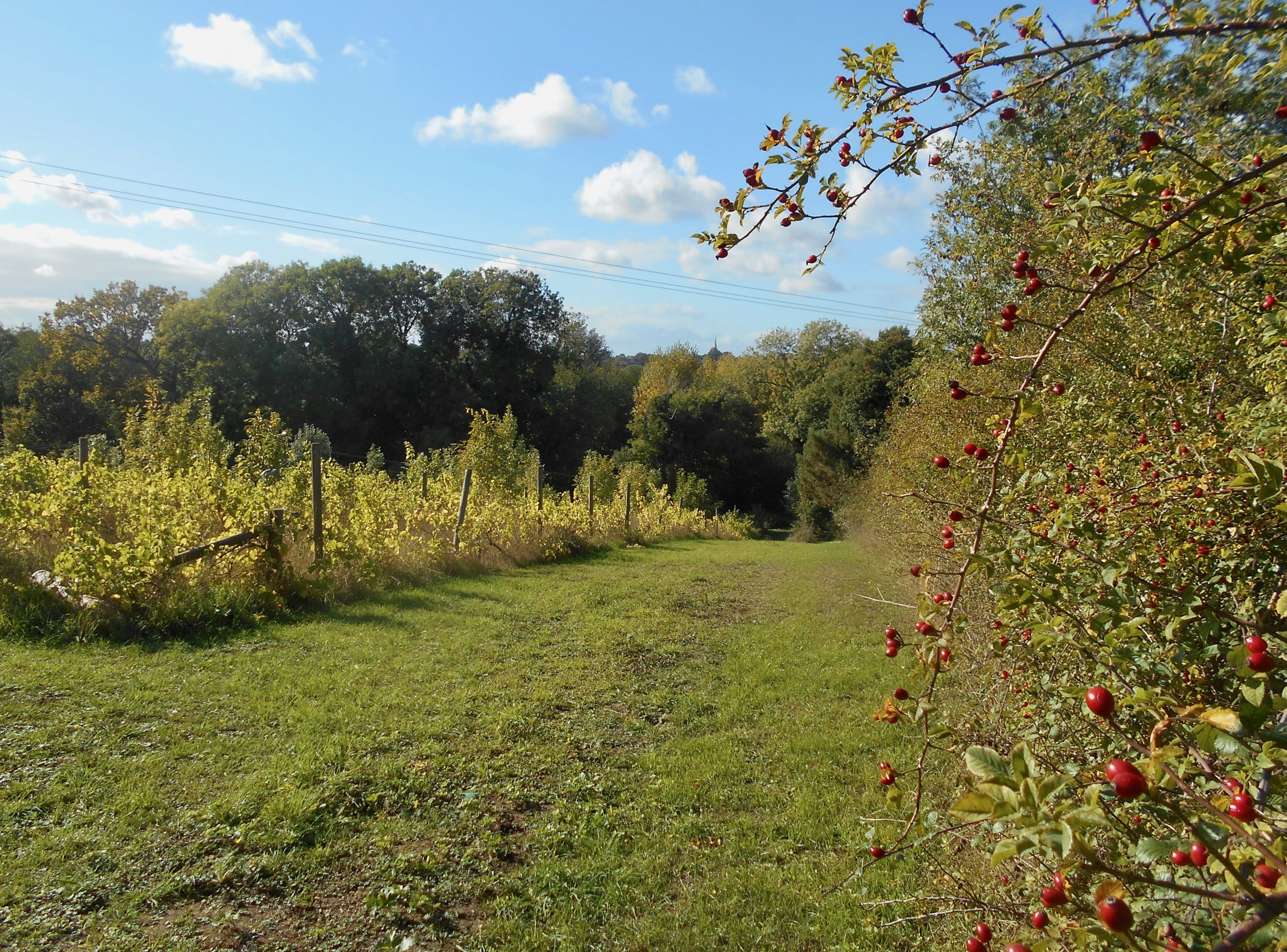
View across the Deben valley from Ashmoor Hall
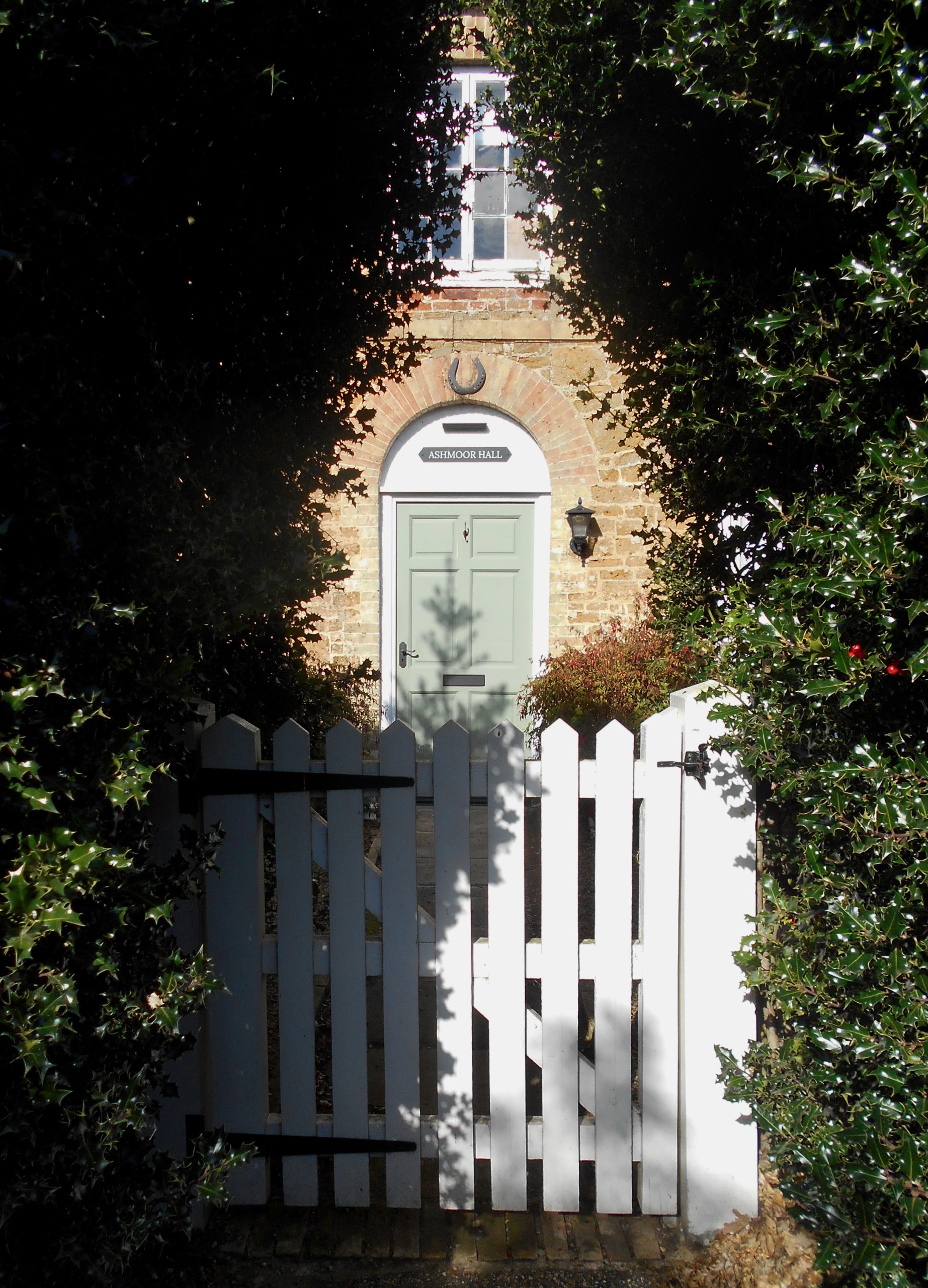
Ashmoor Hall farmhouse
We think this route might be largely underwater in winter and spring and probably be impassable, but of course, following a summer of drought, it was dry underfoot when we walked it. At the foot of a hill the circular route (red arrow signs) turns right onto a narrow footpath alongside a pond. However, out of curiosity, we kept straight on, uphill on a footpath which led us to Ashmoor Hall and farm at the top of the hill. From this vantage point there is a view back over the Deben valley with a glimpse of the tip of All Saints church spire, just visible over the treetops.
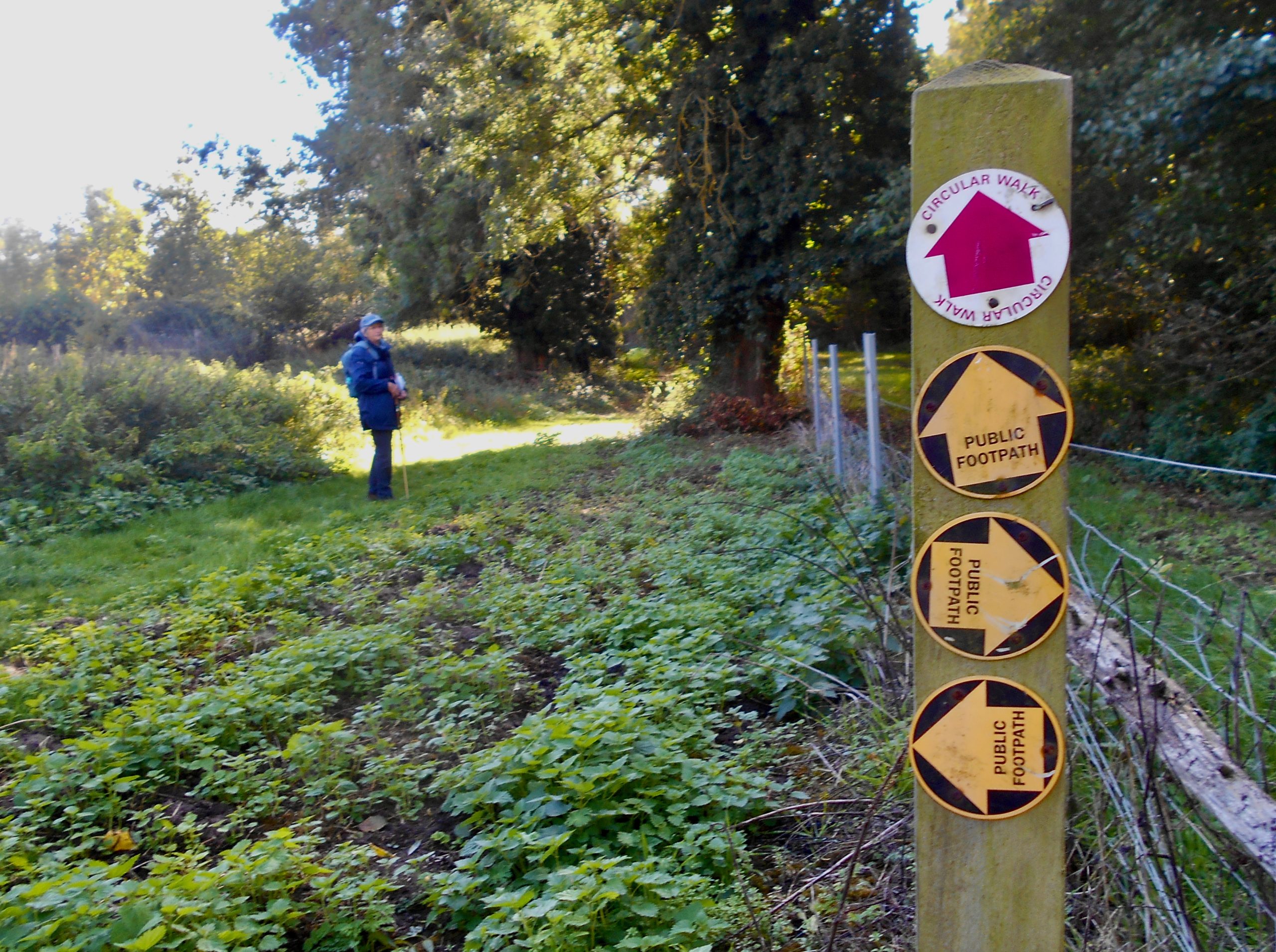
Circular Walk sign
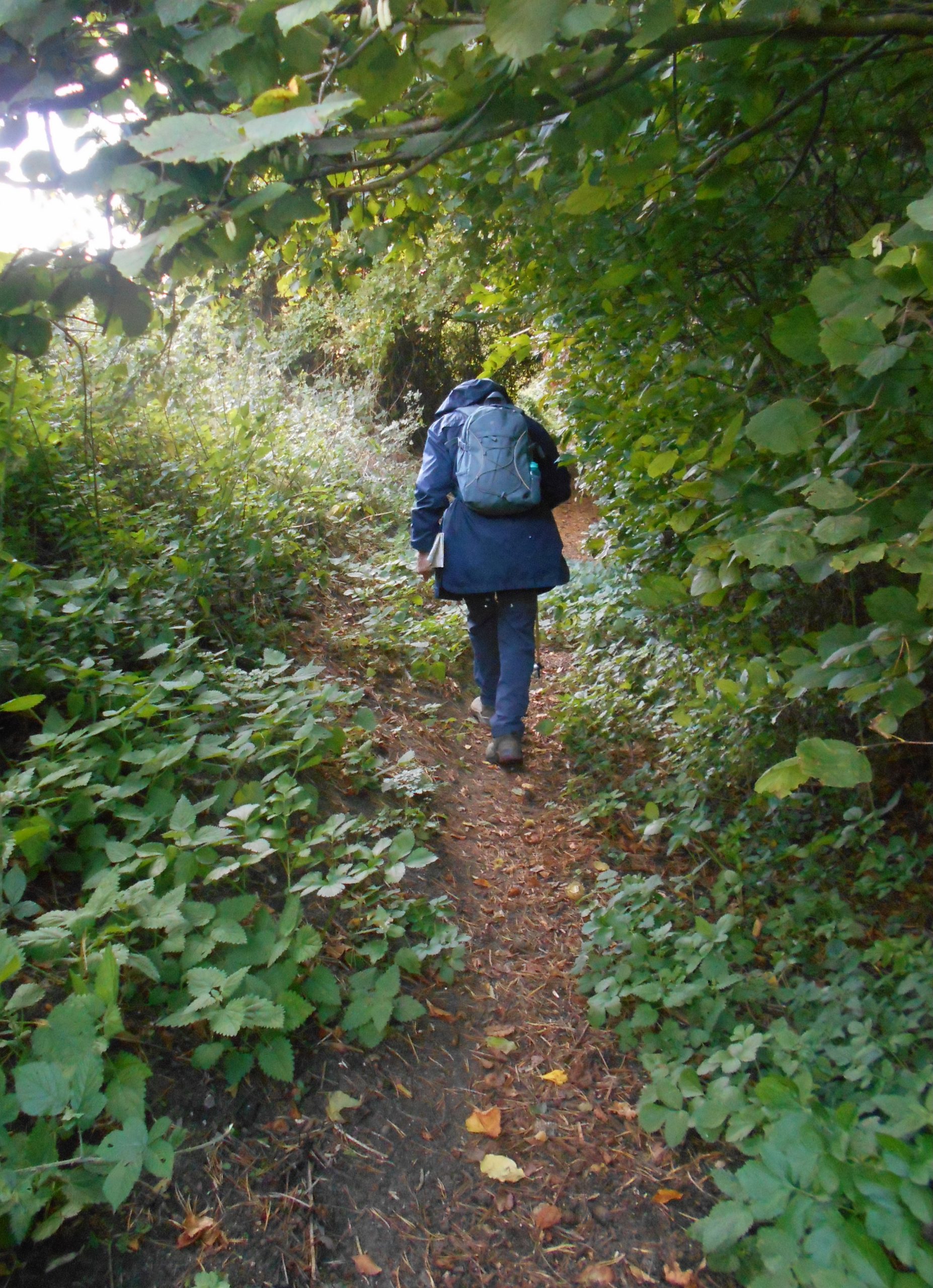
Overgrown footpath to Quill Farm
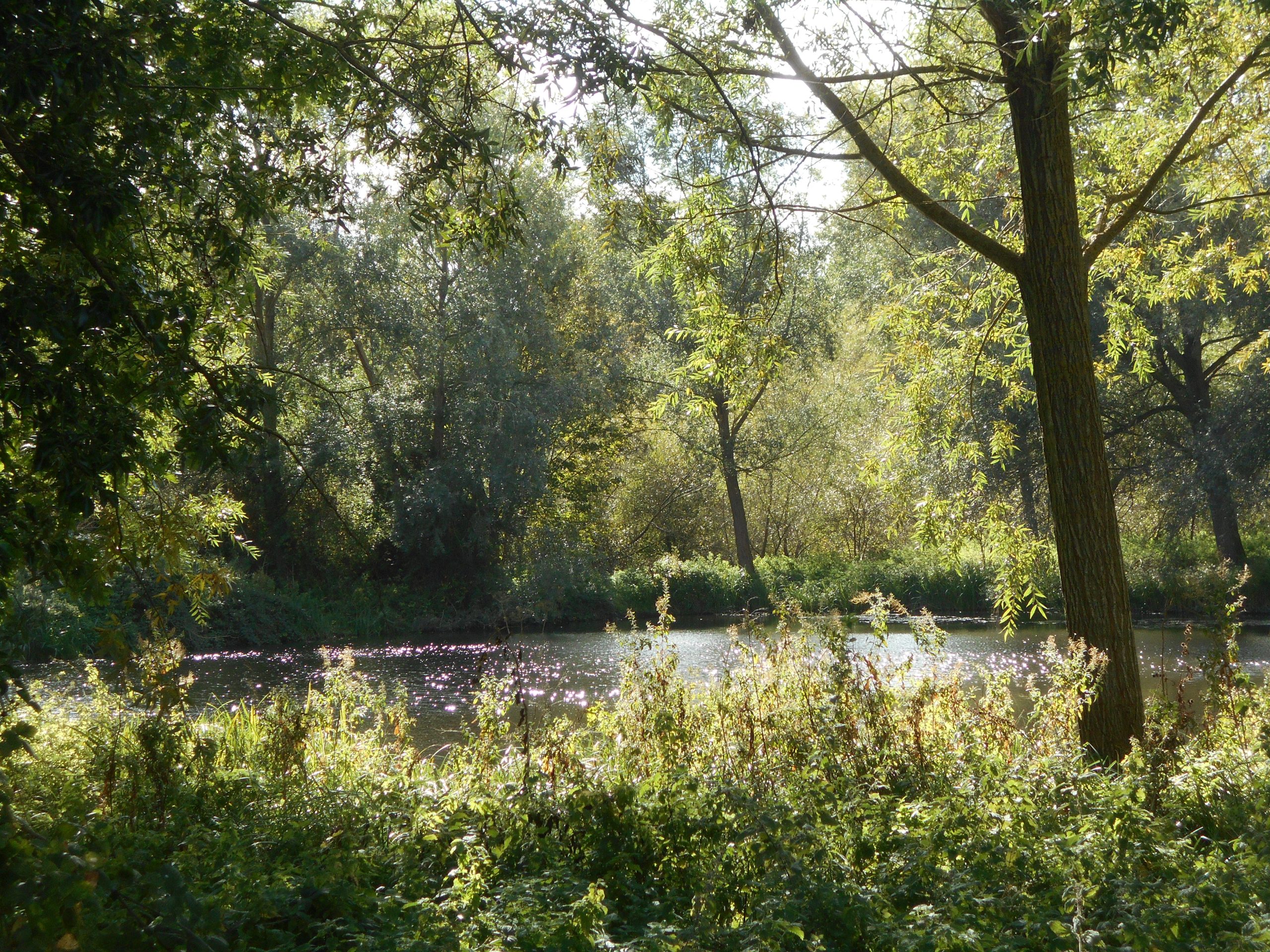
Willow-fringed fishing lake
Returning downhill we re-joined the signed Circular Walk route, following a narrow, and at times overgrown, footpath with willow-fringed fishing ponds on the right, to emerge at Quill Farm. The farm is so named after the drainage pipes called ‘quills’ used when the course of the Deben was diverted in 1204. The property is now converted into holiday accommodation.
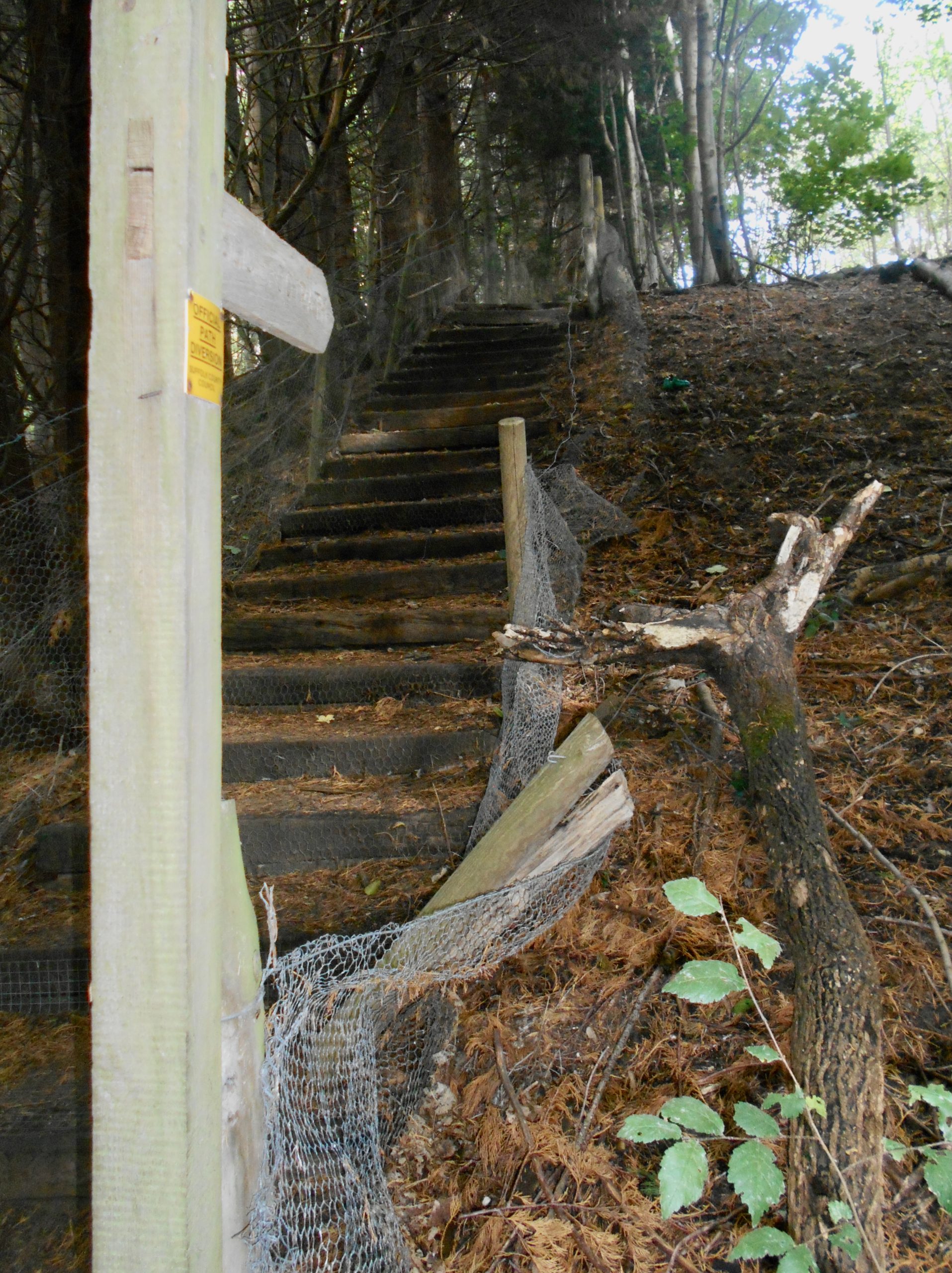
Steep steps in The Oaks near Quill Farm
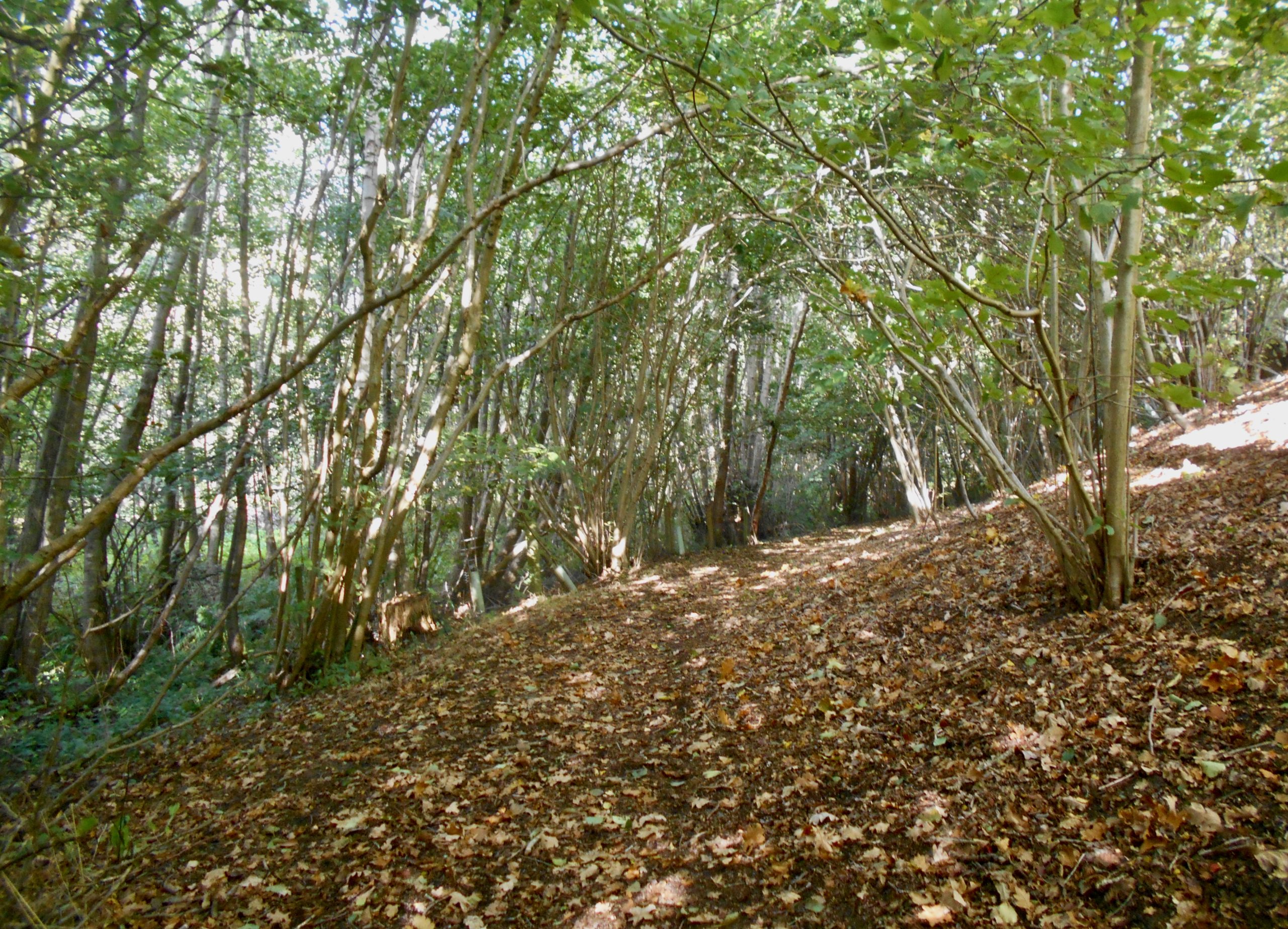
Coppiced hazel wood
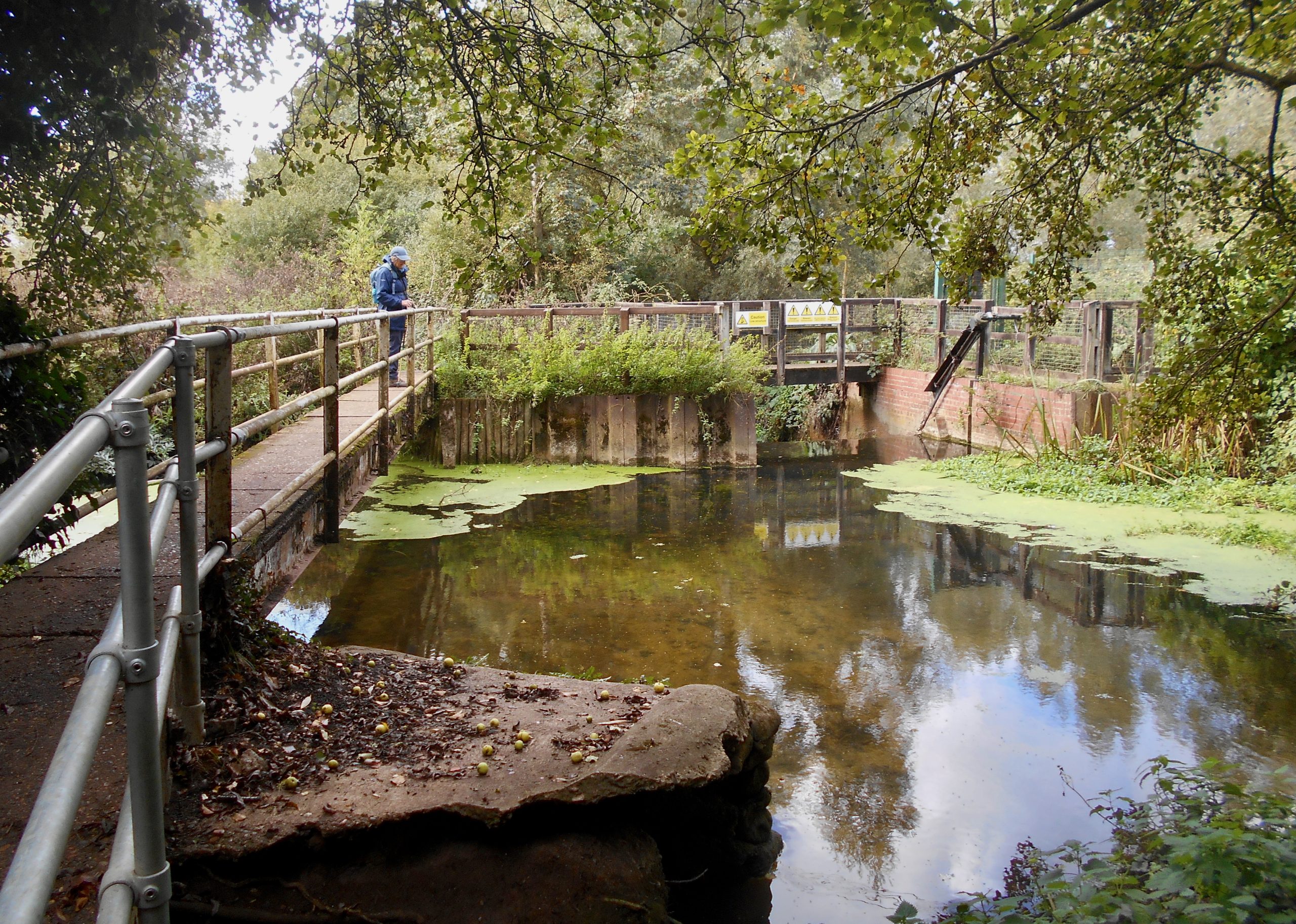
The Deben above White Bridge sluice
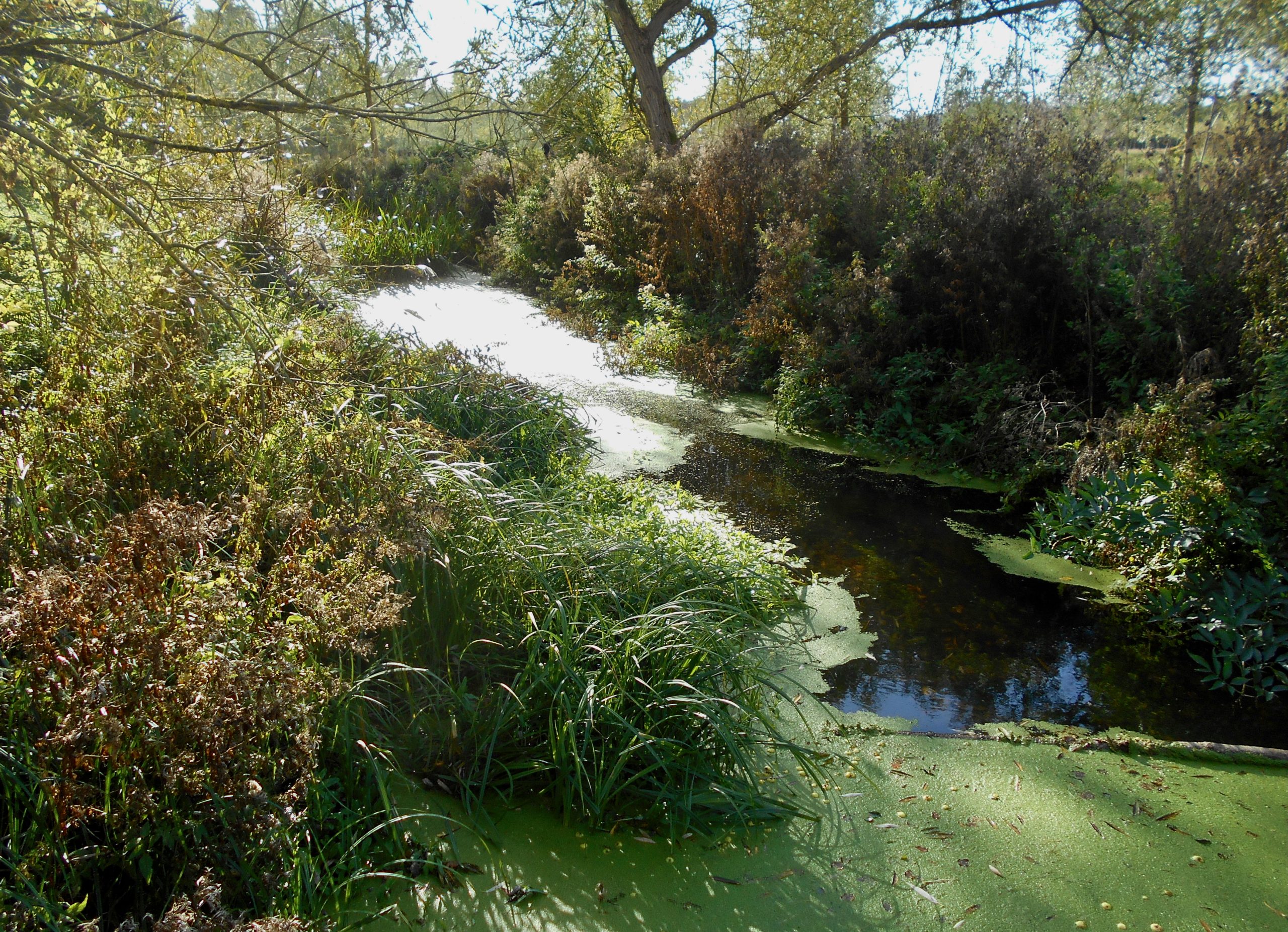
The Deben near the bridges
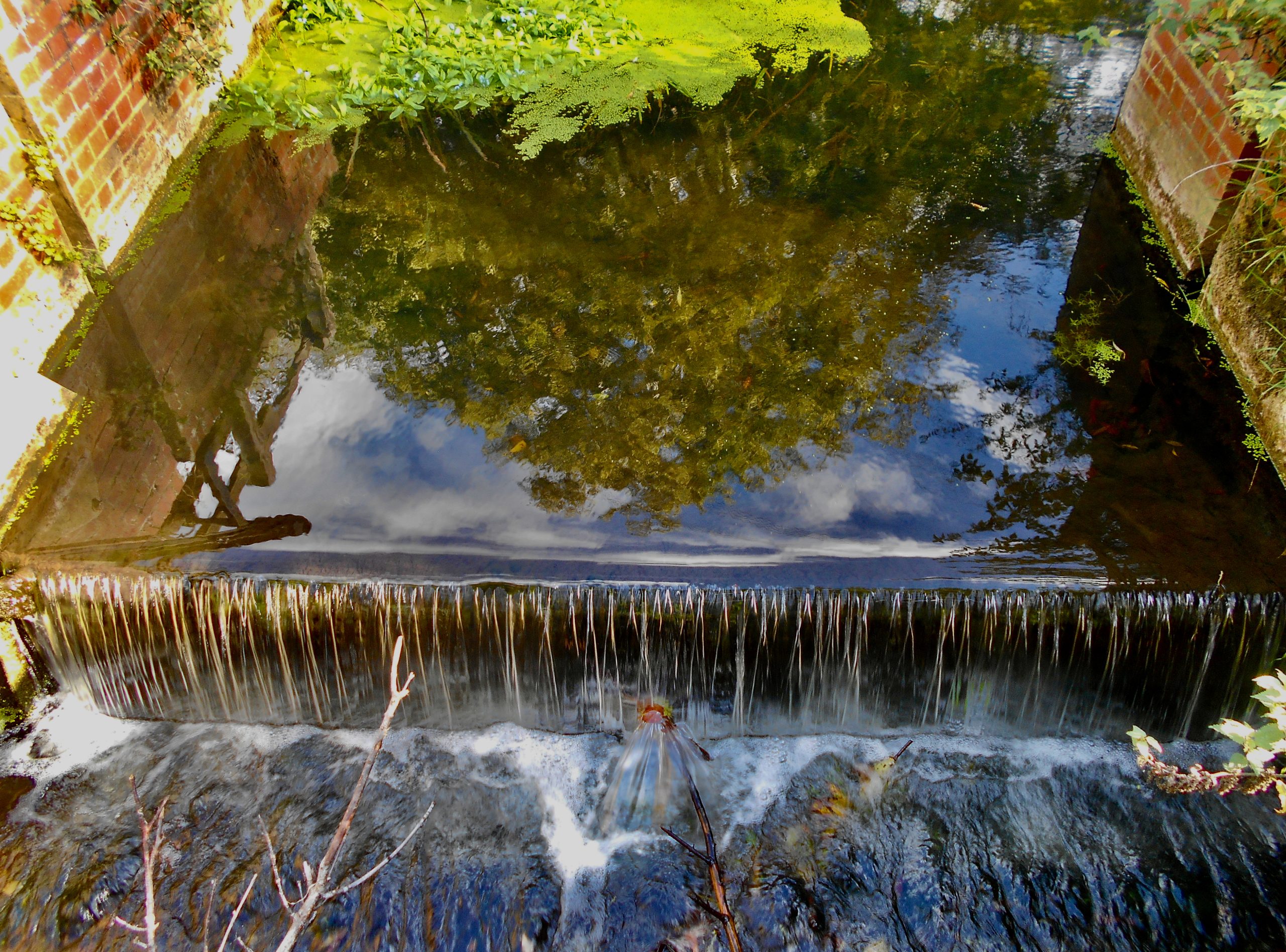
The Deben flowing over White Bridge sluice
Cross the drive onto the footpath opposite and follow it through woodland shown on the map as The Oaks, down some steep steps into a sloping area of coppiced hazel. At the four-ways footpath junction beneath the pylons, turn right to reach the Deben as it winds under the two bridges at the White Bridge Sluice.
You have now returned to the Wickham Market or west side of the river. As you head back towards the A12 along a wide grassy and straight track. you will see rows of silvery green, slender, long-legged trees in the fields on either side. When we were there these trees looked particularly beautiful in the late afternoon sunlight, standing out against a dramatic dark grey sky.
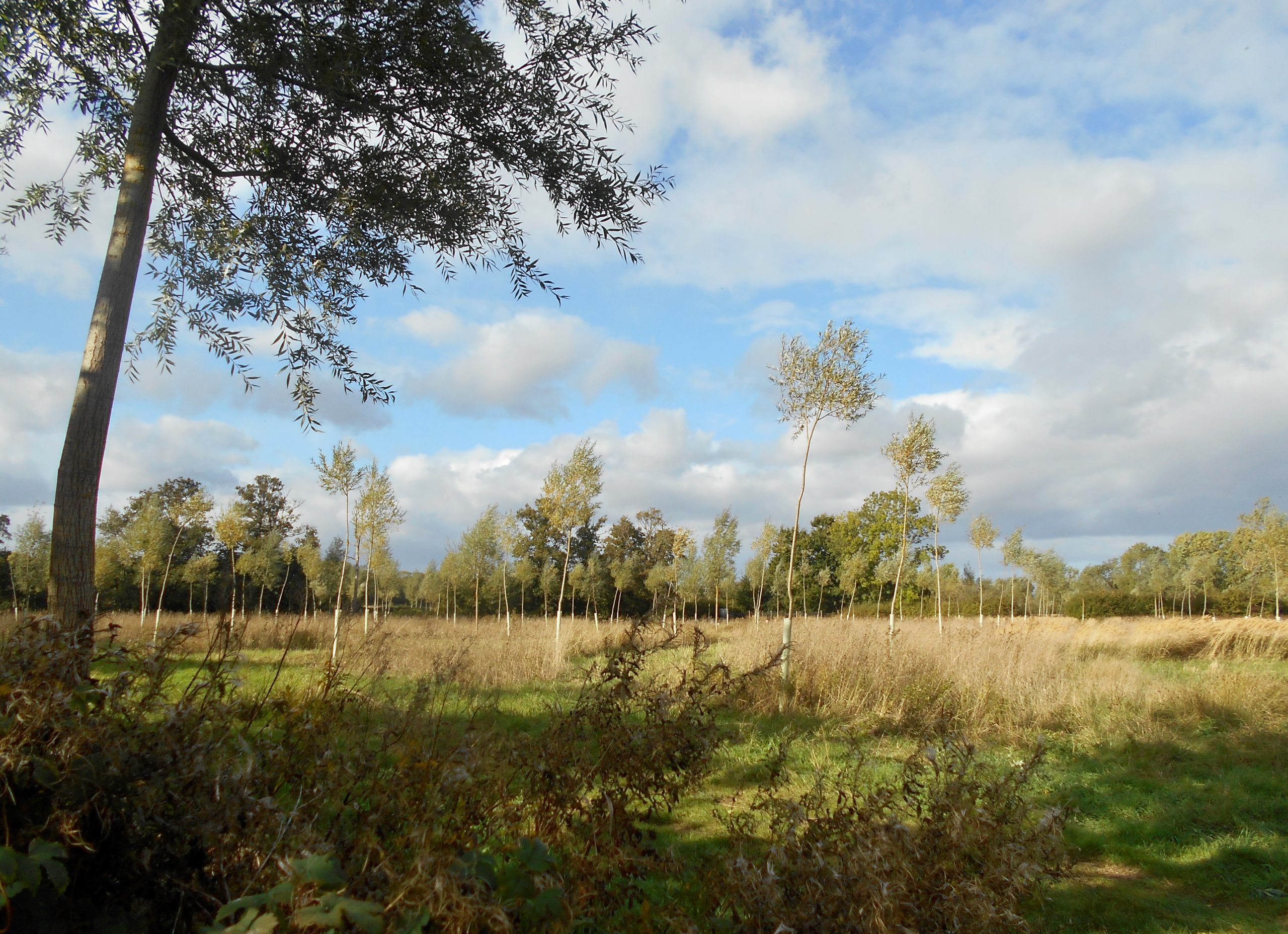
Cricket bat willows near Fowls’ Watering
A little research showed that Foskett Willows of Bromeswell produce 40,000 cricket bats a year, from their salix alba caerula (cricket bat willow) trees. Ninety per cent of their bats go to India and Pakistan. Melton Parish Council recently harvested some mature trees, which were planted locally 20 years ago. As more and more farmers are forced to diversify, rows of cricket bat willow are fast becoming a common sight alongside the upper reaches of the Ore and Alde as well as the Deben, not to mention similar rivers in Essex and other counties. So, in many of our riverside meadows, where once cattle, sheep and horses grazed and hay was made, there is a new order…
Continue across the flood plain towards the A12 and when you reach the cottages at Fowls’ Watering, turn right for a short distance, then left to walk underneath the A12. Proceed uphill along Mill Lane and then right to Pightle Green (once an animal pound) and Church Terrace. This is a peaceful green space in which to have a rest before walking back to The Hill, keeping the church on your right. Cross over on to the Market Place and left back into the car park.

Janet Harber
Janet Harber is the daughter of Jack Coote, known to many as the author of East Coast Rivers, which Jan took on after his death. She is an RDA member and recently celebrated the publication of the 21st edition of East Coast Rivers.