The Peninsula is imbued with a sense of otherworldliness, bounded as it would be by water—the Ore/Alde to the north, the Deben at its southern boundary, and to the east the shingled, windy shores of the North Sea. On leaving the larger towns and villages, you enter a landscape peppered with villages and rural hamlets. Vast fields of sand-friendly crops give way to thick forests, heathlands and marshes. Ever smaller, sharply cornered roads meander through the landscape, lanes disappear into dead-ends, farmsteads, rivers. Its sparsely populated communities holding tight to their identity. In years gone, by each would have been fiercely independent, self-sufficient. A philosophy that I am sure remains today, despite the in-comers and inevitable supermarket vans.
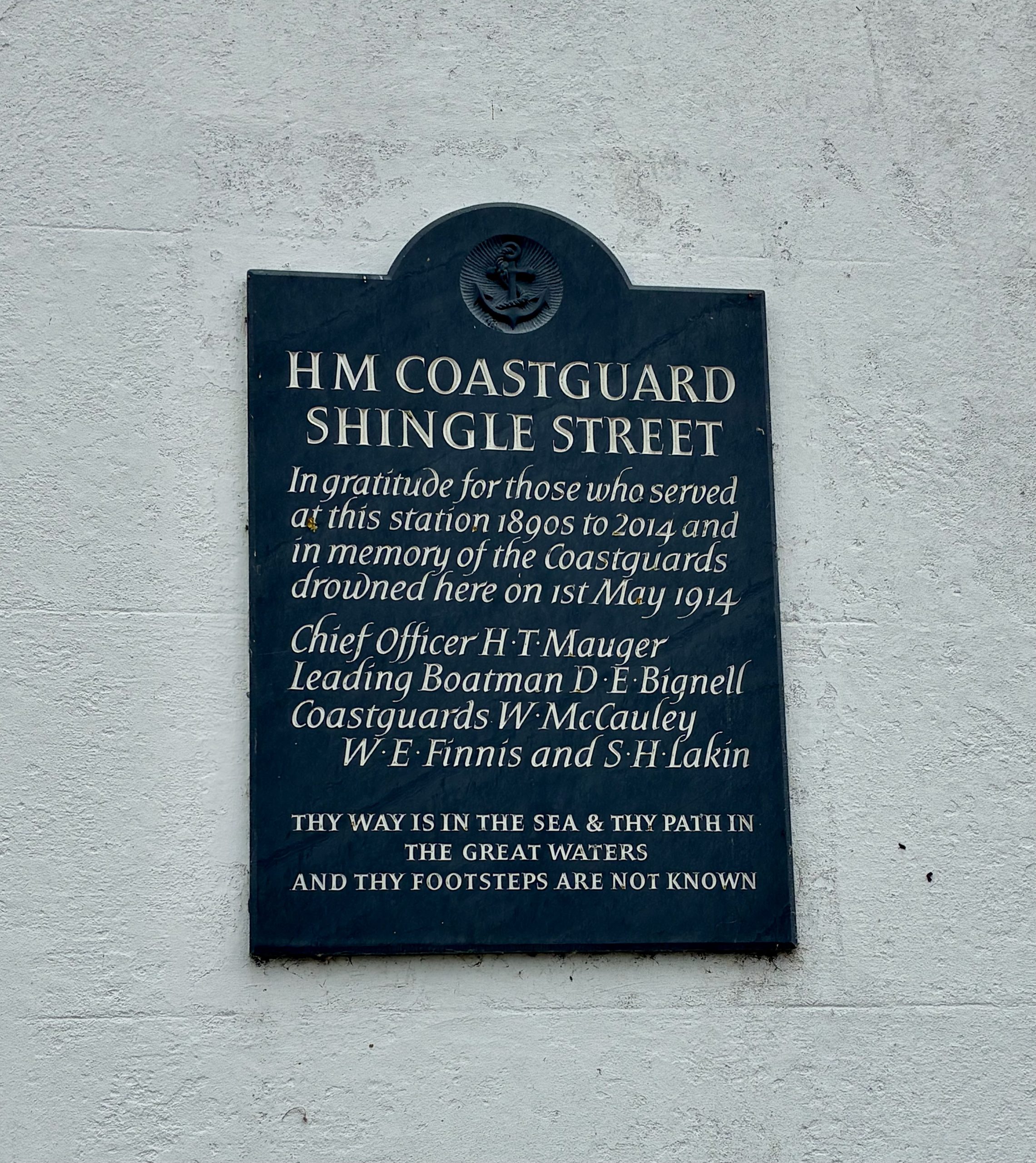
Whichever way you travel, follow the spider’s web of narrow lanes to Hollesley, where a small road turns down towards Shingle Street. After crossing a wide marsh, the road ends at a straggle of houses. They seem perched on the very lip of the ocean looking east as if watching for an invading armada. Between them and the sometime thunderous sea are the massive banks of undulating shingle that give the place its name. The tides and winds are treacherous here; warnings to swimmers abound. Ships are often beached on the shifting banks, whilst from the sea comes the ominous ringing of the Orfordness buoy, tolling as if a death has happened. Imagination takes you to a PD James mystery with its mists and murk and murder afoot.
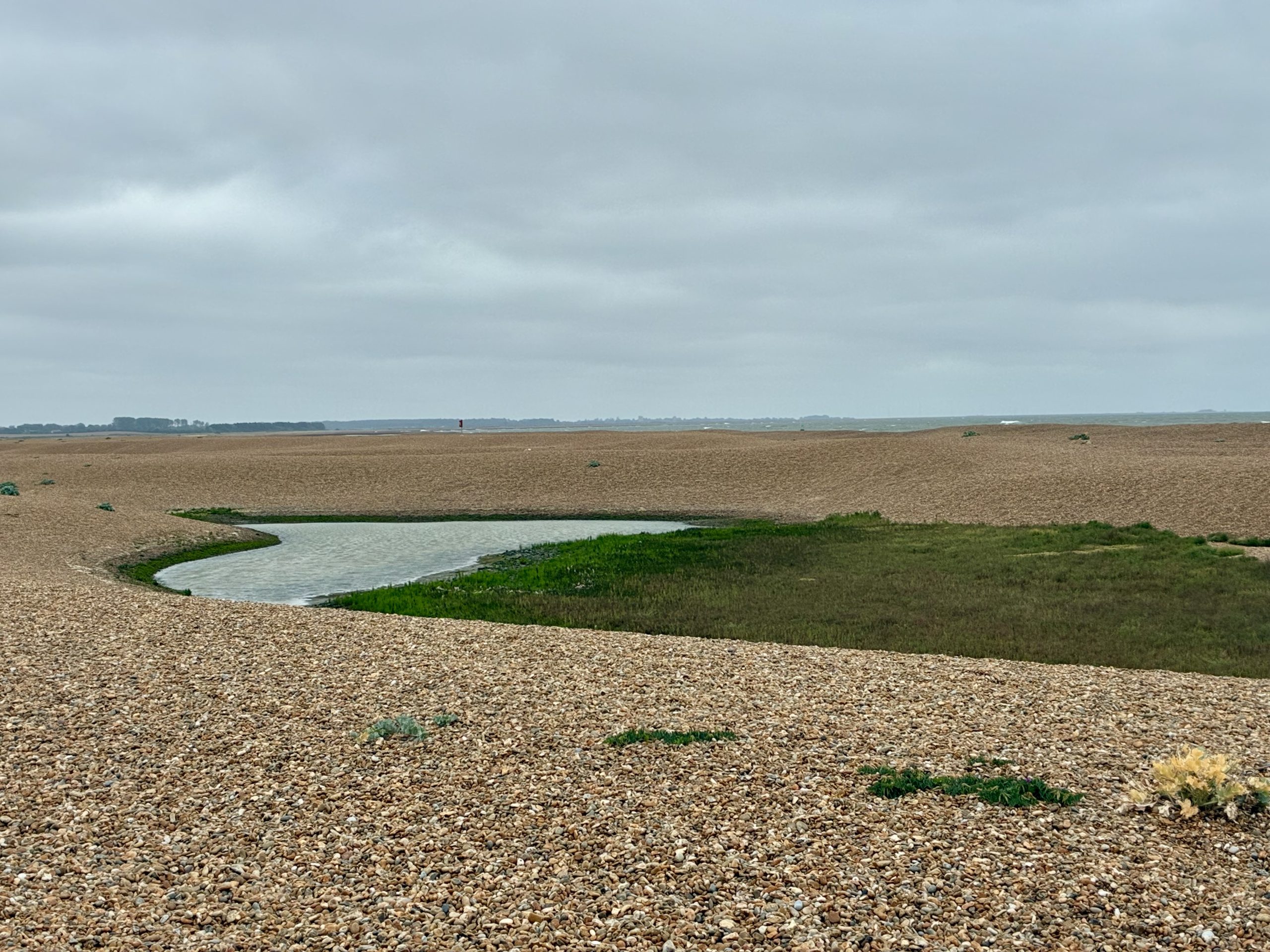
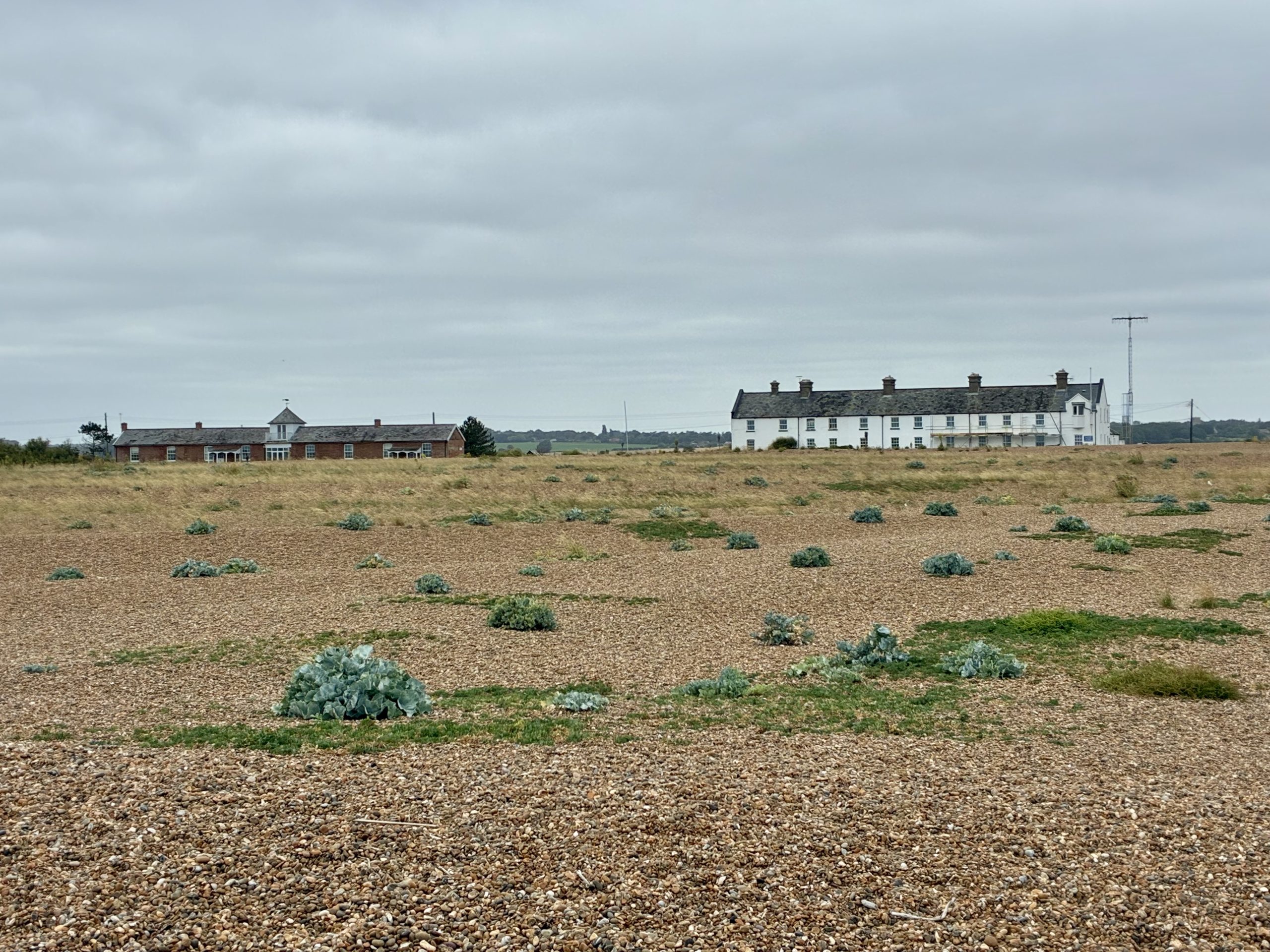
Park in the small free carpark and walk onto the beach, where a myriad of wild flowers flourish—marsh valerian, vipers bugloss, sea campion, bedstraws, long horned poppies, sea kales and spinach, dotted with bright purple sea peas and dancing blue scabious—and follow the shingle over to the shoreline. Here waves lap over or beat at the stones beneath wide skies. There is an inland lagoon of tepid water full of shifting sands. And then, further along the beach a long line of white shells that lead diagonally back to a white cottage. This was started by two Dutch ladies, both receiving cancer treatment as part of their personal therapy, add to it as you pass: a memorial to their endeavours.
The single row of houses are themselves a strange mixture, from the old Coastguard station at the entrance, with attendant cottages, to modern glazed houses and older properties, each with wind blasted gardens filled with shoreline flowers. This scenic collection of homes have played their part in films, most notably A Child in Time, by Ian McEwan, and more recently the home of John Lennon in Richard Curtis’s Yesterday.
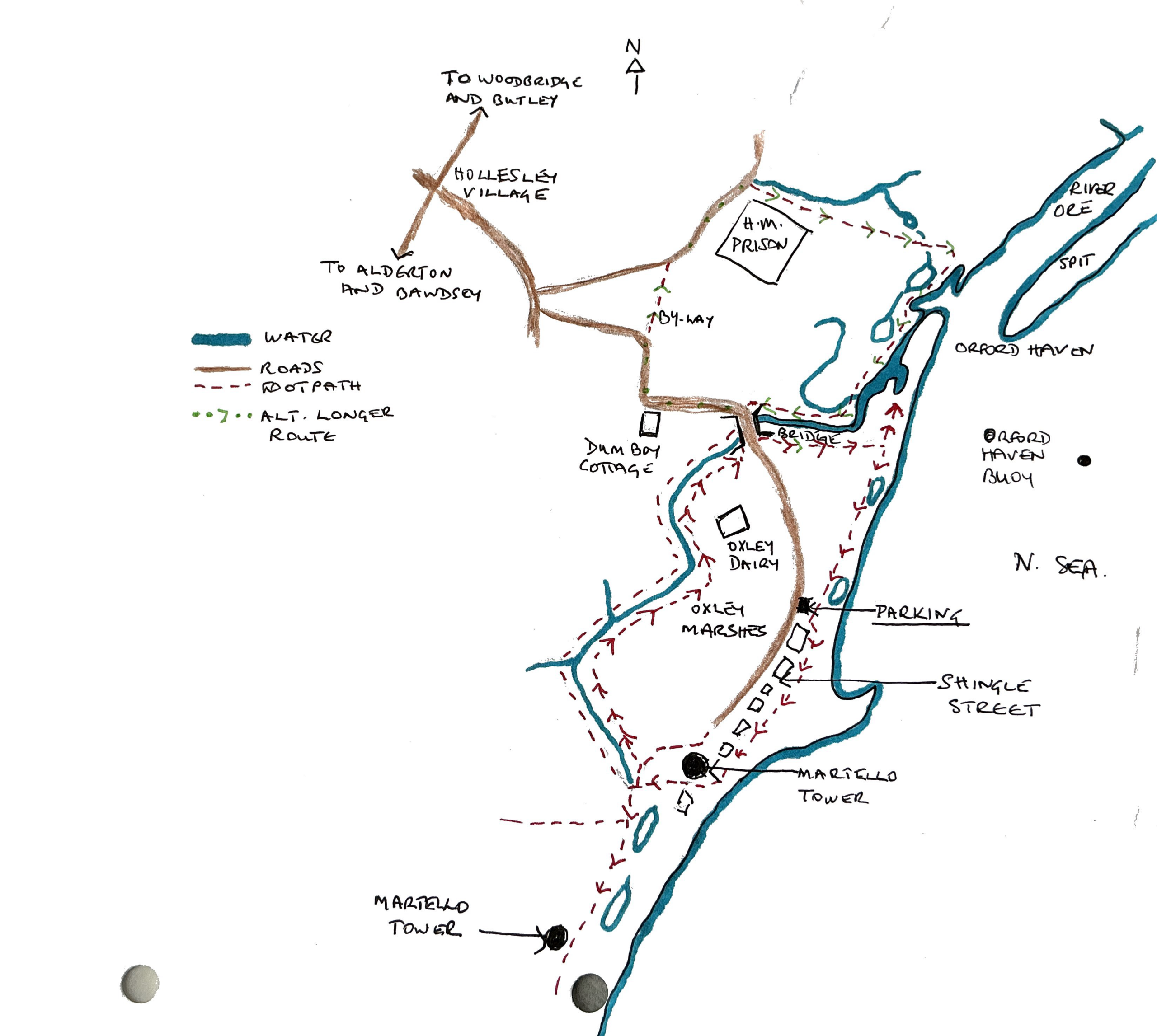
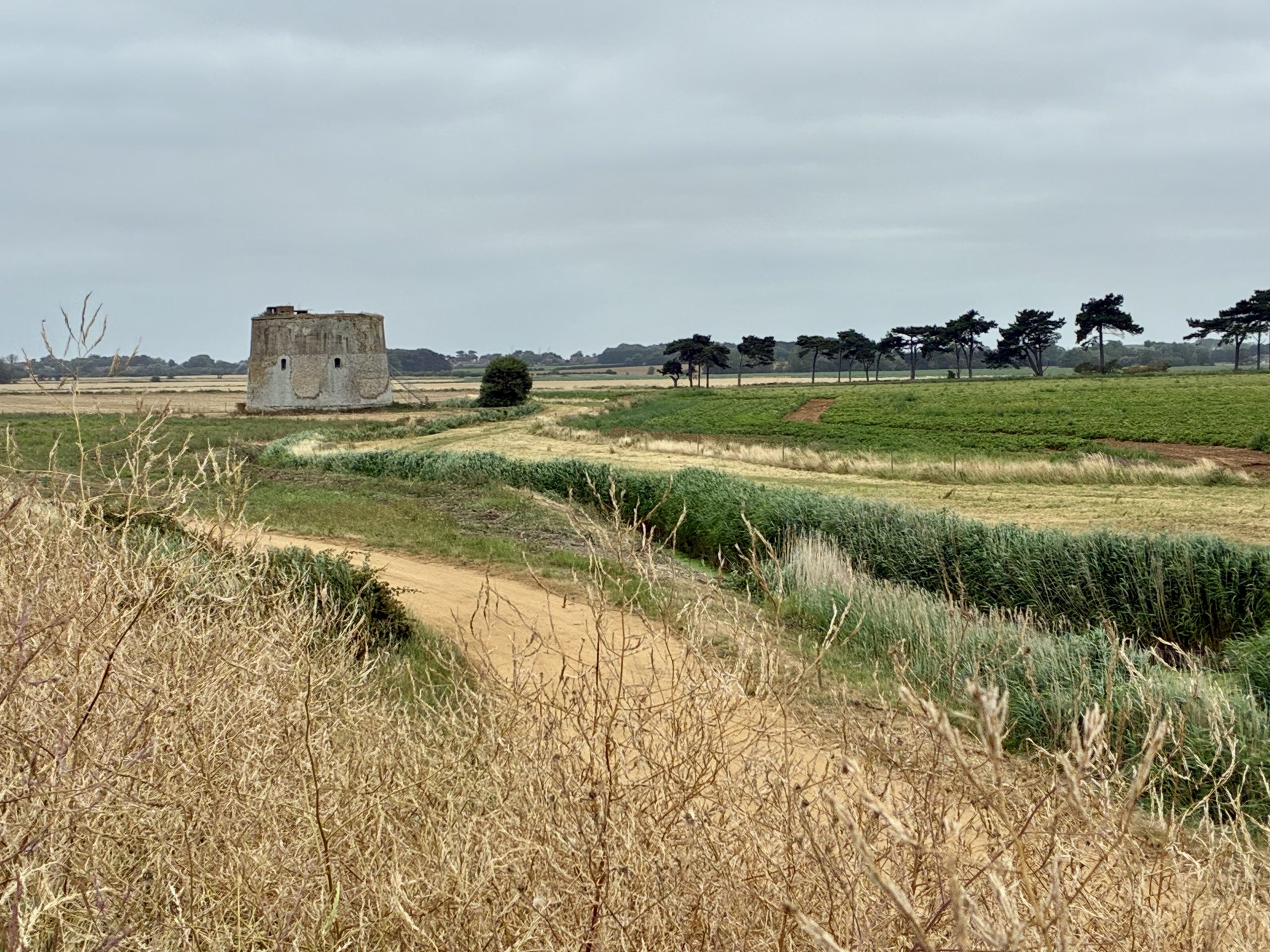
Follow the beach and pass the Martello Tower, the first one south of Aldeburgh, shortly followed by four more along the shoreline towards Bawdsey. Turn inland down the small path as marked and head for the river/sea wall. Turning left here is a long path following the marsh and farmlands towards each of the Martello towers. This, if chosen, is probably best as a there and back walk rather than making a ‘round’ over the fields. Otherwise turn right and keep to the right-hand side of the dyke to follow a long track across the marsh behind Oxley Farm. It is a flat, rural landscape with reed beds and hay fields, occasional sheep and cattle depending on the season. Keep to this path to reach the road.
At the road, cross over to follow the river on the other side, or if you wish to make the much longer walk through the Hollesley Open Prison, turn left there to DumBoy Cottage, then follow as shown on the map. The return from this walk is a bit further along the same road, so by turning left when reaching this point, you can join the walk along the river again.
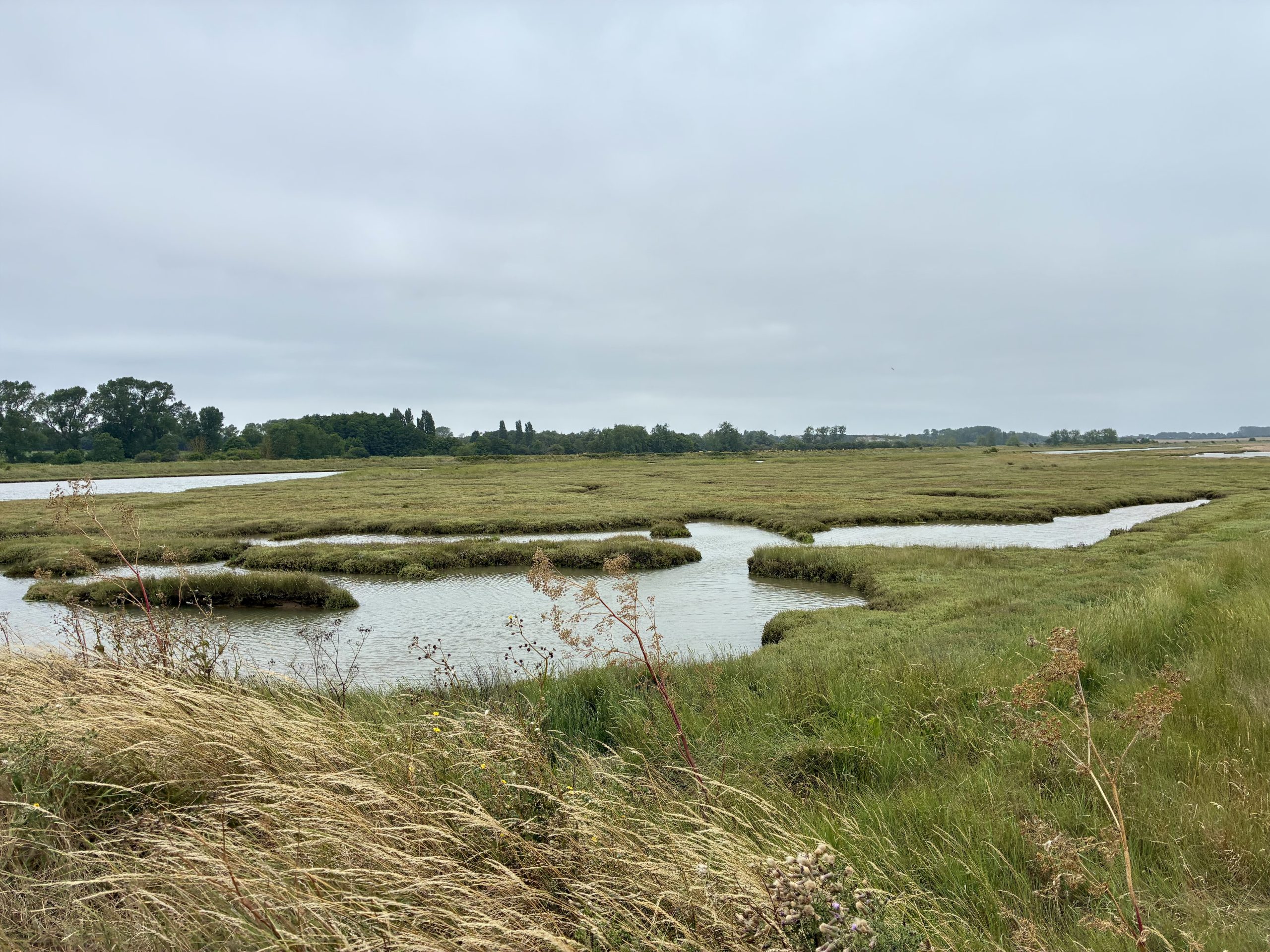
It is easy to follow this path towards the beach, but before turning right and back to Shingle Street, turn left. Take the various little paths and meander over the winding marsh which will either be filled with seawater or mud depending upon the tide. Sit quietly for a bit and watch as egrets peck at the mudflats and seagulls mew into the air, you may catch a glimpse of oyster catcher, curlews or even a bittern, among the seabirds going about their daily rituals.
Turning back, cross the shingle banks to reach the mouth of the river Ore. It is small wonder that a bell tolls at its entrance, as the tide rushes in or out, pulling boats, boards, flotsam in its wake. Islands or islets on the further side appear or disappear as the tide ebbs and flows and the river slides its way north to Orford. The outline of this town’s castle and church are easy to pick out; it is where Queen Eleanor of Aquitaine assembled her fleet in 1194 to ransom her son King Richard I. But nowadays looking out to sea, there is a new fleet of ships; vast hulks that pepper the horizon like islands, awaiting their turn to offload in Felixstowe docks.
Shingle Street is a walk for all season. Glorious on warm summer days with sparkling waters, a haven for kite surfers, and on occasion groups of Afghani men practicing kite flying. Spring brings a flower filled freshness. But Autumn and Winter are magical—days when the wind whips up the waves and spume flies along the shore, or perhaps the air so still that mist hangs low to hug the marsh. Then it is a place of smugglers and Abel Magwitch.

Sue Ryder Richardson
Sue Ryder Richardson was born in Suffolk and has explored it on foot for as long as she can remember.