Members are welcome to come to the AGM (in person for the first time in 3 years!) at the Woodbridge Community Hall, 6.30 pm
Agenda
Members are welcome to come to the AGM (in person for the first time in 3 years!) at the Woodbridge Community Hall, 6.30 pm
Agenda
By Liz Hattan
The East Anglian Daily Times recently published an article on sewage overflows into Suffolk rivers (October 26th 2021), highlighting those rivers with the highest number of spills in 2020. The River Deben had 40 spills at its Deben Road overflow, totalling 18 hours. Other rivers such as the River Thet fared worse with over 1100 hours of spills at Badwell Ash, and some sites in the other parts of the country have seen thousands of hours of spills (see Rivers Trust interactive map for local data ‘Is my river fit to play in?’ https://arcg.is/19LiCa). Nationally, the number of spills is high with over 400,000 monitored spills (around 3.1million hours) in 2020 into English rivers and many more unmonitored ones.
So why are there are so many spills, why does it matter and what is being done to address the problem? This is a high profile issue with considerable political, media and public scrutiny. This article looks at some of the challenges. Continue reading
By Julia Jones
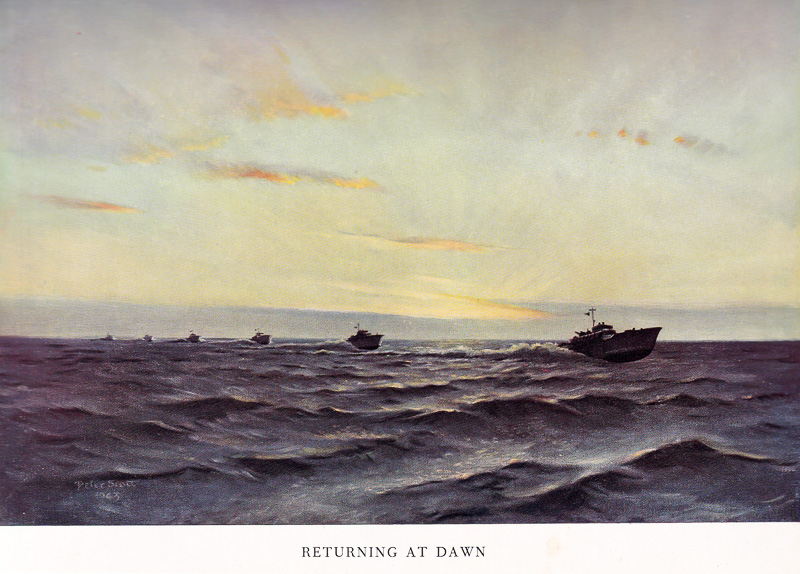
Gunboats at dawn, painted by Peter Scott.
I’ve recently completed a study of some of the yachtsmen who volunteered to serve ‘in an emergency’ in the years before the second World War. From December 1936 the Admiralty issued an invitation to ‘Gentlemen interested in yachting or similar pursuits’ to put their names forward for ‘executive’ service. These men formed the RNVSR, the Royal Naval Volunteer Supplementary Reserve. In the process of research, I have been fortunate to have met some of the descendants of these men. I’ve been glad of their help and have also found that they share my feelings of respect and heartfelt gratitude for the way in which their fathers, uncles, grandfathers chose to put their normal lives, pleasures, careers on hold, committing themselves to serve wherever they were sent. Sometimes the jobs they were assigned to do were tedious, more often they were terrifying. Continue reading
By Sue Ryder-Richardson
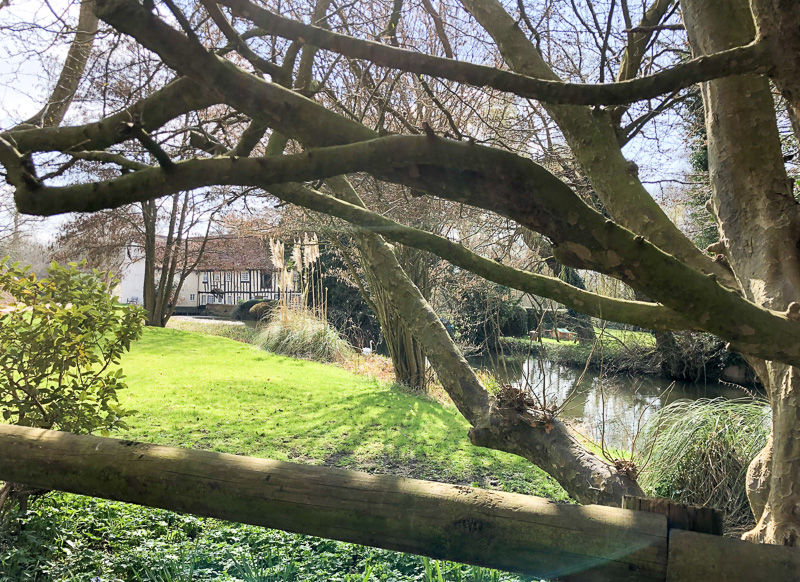
Rivers. The lifeblood of communities for generations, the Deben, from source to mouth, is one such. The river and its tributaries nurtured villages, gave grist to many mills, and fed and watered the all-important abbeys. Explorations around Wickham Market have revealed Paleolithic, Bronze Age, Roman, Anglo Saxon, and medieval relics. Both the tidal flood of this river and its inland arteries have supported this lineage of settlements.
A ramble around Wickham Market and Campsea Ashe [1] offers an insight into the generations that have lived, and worked alongside the Deben, from the C18th Rackham’s Mill, through the ancient, coppiced woodland ‘The Oaks’, alongside medieval fishponds, beside ‘Ashe Abbey’ which stands on the ground of the C12th Augustinian Priory of St Mary’s, but mostly walking over water-meadows that have brimmed and supported life for centuries.
By Sally Westwood
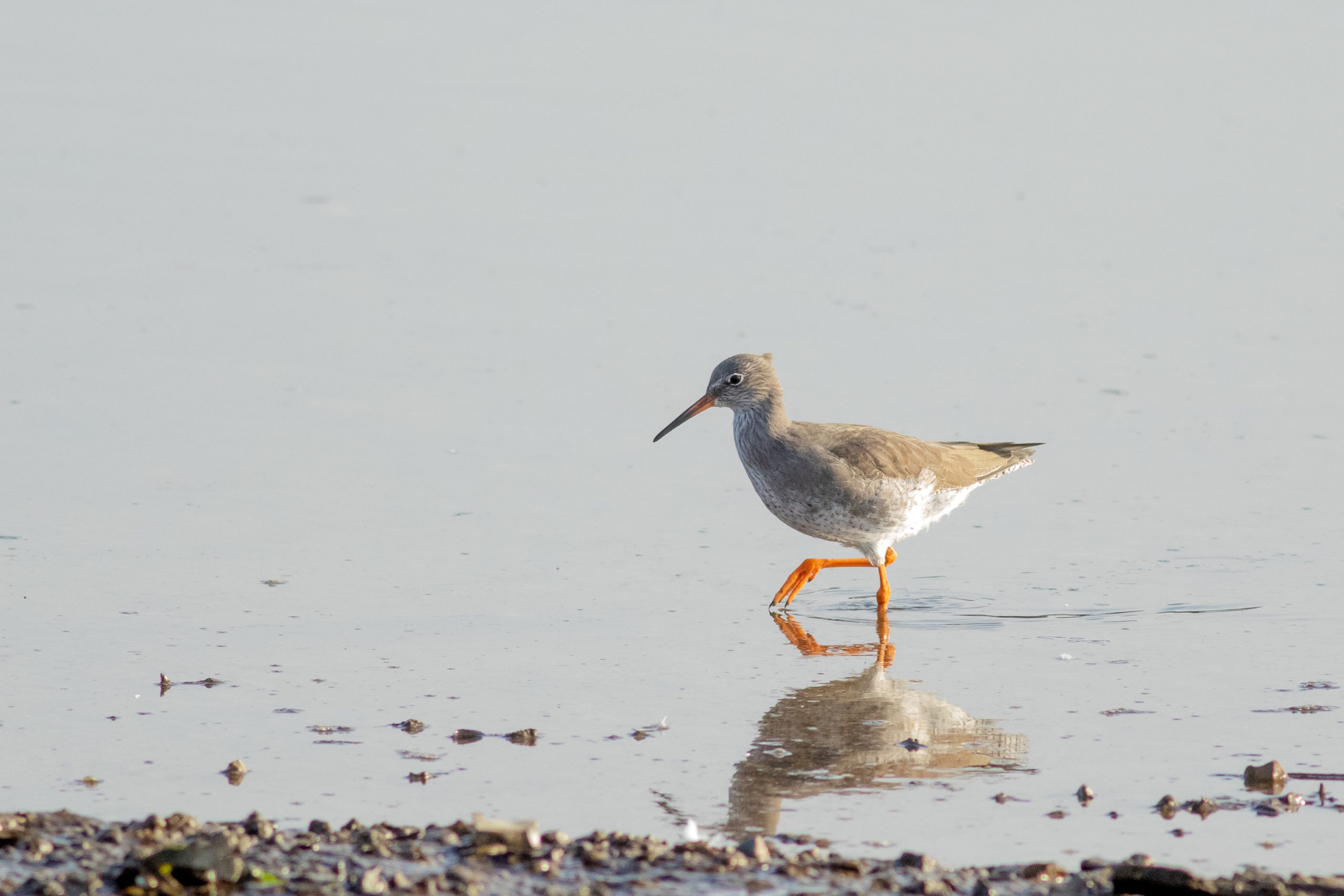
In 2021, Suffolk Coast & Heath Area of Natural Beauty (AONB) selected the Redshank1 as their flagship bird as a part of their Nature Recovery Plan2. Commendably, they called for volunteers to help with the project of protecting the Redshank including their nesting habitat. Redshanks are present on the River Deben but I have only ever seen one feeding along the river’s edge, on my river walk. I thought it might be interesting for the reader to have some insight on the background of Suffolk Coast & Heath AONB’s Nature Recovery intervention and the plight not only of the Redshank, but as we might have suspected, a considerable number of species of birds, that visit the Deben. It is not a comfortable read, however, the good news is, steps are being taken to stop the decline in species.
By Matt Lis
Photo courtesy of Charmian Berry.
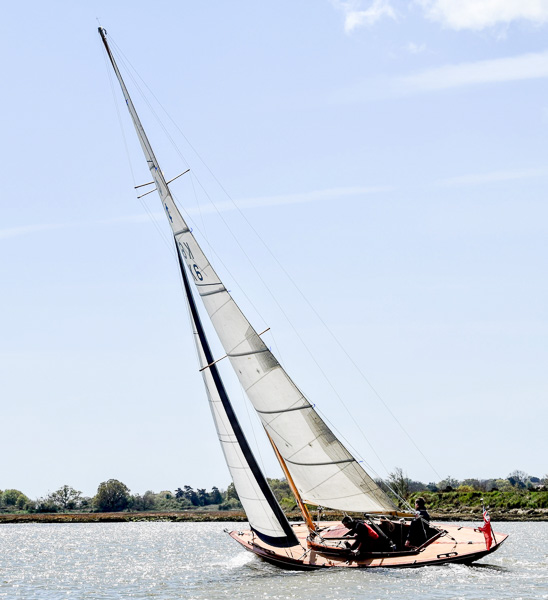
An International One Design is not a typical Deben boat. The International One Design with its long keel, deep draft, powerful rig and sleek lines was actually designed for the waters of Long Island Sound and Bermuda, with one purpose in mind: to race. International One Designs, IODs for short, are now found all over the world. The design was quickly popularised after their initial build in 1936 and spread across the United States. Soon fleets sprung up in Norway and at the Royal Corinthian Yacht Club in Burnham-on-Crouch, Essex, too. To give some more local context, in 1936, whilst Bjarne Aas was designing and building the first IODs at his yard in Norway for the class’ conceiver and driving force Cornelius Shields, in Woodbridge Everson & Sons were building the penultimate Deben Cherubs and Whisstocks Boat Yard was building the first of the Deben Four Tonners.
A Poem by Christine Redington
First published 2018. Copyright: Christine Redington
In the darkness, listen,
listen for the sound of breaking surf
to hear where the shoals lie,
broken water on either side of the bar
a guide to the channel
into the estuary.
By Bertie Wheen
…by a river we all call home, there was born an association.

Page 5 of the River Deben Association Newsletter, Spring 1997.
Continue readingBy Julia Jones
As well as being the fortunate editor of The Deben Magazine and The RDA Journal I have what I consider the dream job of ‘literary contributor’ to Yachting Monthly magazine. My duties every month are to select a 1000-word extract from any nautical book – old or new – which I think readers might enjoy and include it in the print edition of the magazine with a few details about the author and publisher. I also provide short reviews of three new books. They can be cruising stories, nautical fiction, instruction, advice, pilotage – or matters connected. (I’ve just selected an extract from an extraordinary book about the music of coastal foghorns for our March 2022 issue.)

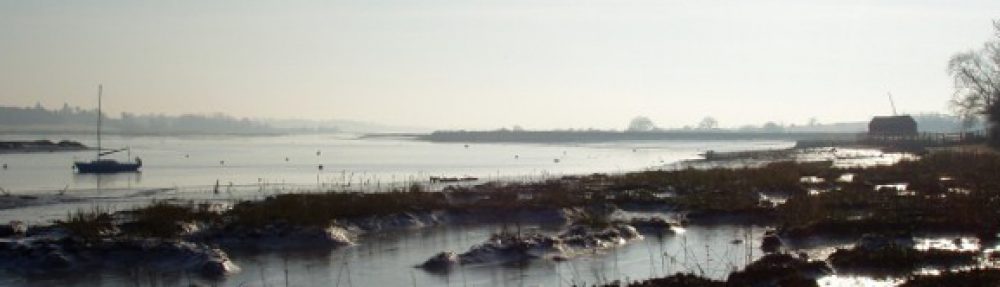
Tidal flats on the upper reaches of the River Deben near Woodbridge (photo from Coatwise, published by Fernhurst Books).
By Gary Rogers
In the light of COP26 we should all be questioning our energy use. As boat dwellers we aren’t eligible for government grants and feed in tariffs but that shouldn’t stop us taking steps to a more sustainable energy use.
As an Electronic Design Engineer living afloat for the last 30 years, I have inevitably tried and tested a multitude of off grid solutions, some more successful than others.
Tijdstroom, the Dutch barge Gary and his wife Bev live on, during the 2020-2021 winter